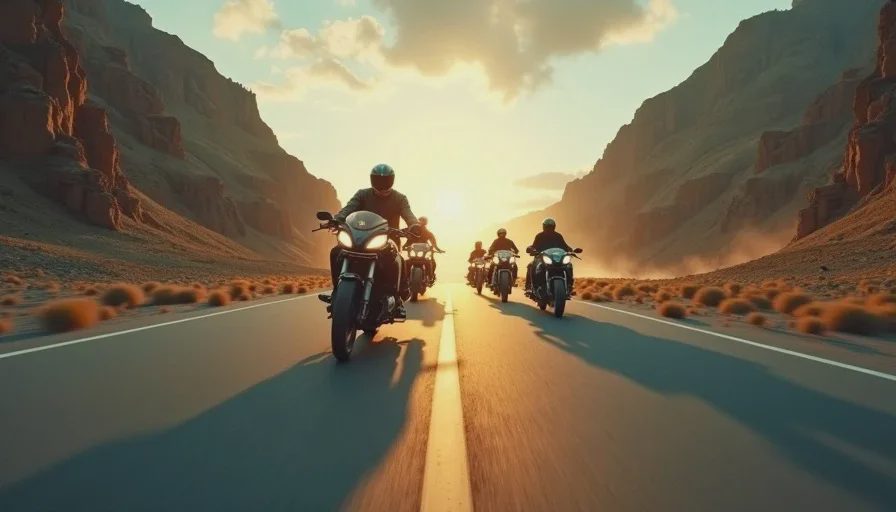
I was on a trail in the Sierra Nevada with a group of four trucks. It was a good group. Mixed experience. Mixed vehicles. Everyone was friendly, capable, and excited to be out.
Except for one guy.
He was the most confident driver in the group. He'd been running trails for twenty years. He had the biggest tires, the most modifications, and the loudest opinions. He'd done this trail before. He knew the route. He was going to lead.
"Just follow me," he said. "I know this trail like the back of my hand. We'll make good time."
He took off. Fast. Too fast for the terrain, if I'm being honest. But he was the leader. He set the pace. And the rest of us followed.
I was third in line. I was trying to keep up. I was driving faster than I was comfortable with. Faster than my vehicle was happy with. Faster than I'd ever driven that trail.
My daughter was in the passenger seat. She was quiet. She knew I was pushing it.
"Why are we going so fast?" she finally asked.
I didn't have a good answer. Because the guy in front of us was confident? Because I didn't want to be the slow one? Because I was afraid of looking weak?
All of those reasons. And none of them were good.
The Crash
We were about two hours in when it happened. The lead driver hit a section of loose rock at speed. His rear end slid. He overcorrected. The truck went off the trail, hit a rock, and came to a stop in a cloud of dust.
He was fine. The truck was fine—mostly. A bent tie rod. A scraped fender. A bruised ego.
The rest of us caught up and stopped. We spent the next three hours getting him out, fixing the tie rod, and waiting for his adrenaline to fade.
His confidence had set a pace that was too fast for the conditions, too fast for the group, and too fast for his own skill. And we'd all followed him right into trouble.
The Problem With Confidence
Here's the thing about confidence. It's not the same as ability.
Confidence is how you feel about your skills. Ability is what you can actually do. And sometimes, the two don't match. Sometimes, confidence outruns competence. And when that happens, it's the whole group that pays the price.
What confidence looks like:
Speed. Fast decisions. Fast pace.
Certainty. No hesitation. No doubt.
Authority. Others follow because they assume the leader knows what they're doing.
Momentum. Once the pace is set, it's hard to change.
What competence looks like:
Awareness. Knowing the conditions. Adjusting to the terrain.
Judgement. Making decisions based on facts, not feelings.
Humility. Willingness to slow down, stop, or turn around.
Communication. Checking in with the group. Adjusting the pace.
Confidence without competence is dangerous. It leads to bad decisions. It pushes the group beyond its limits. It creates pressure to perform—to keep up, to prove yourself, to avoid looking weak. It's a recipe for mistakes that don't need to happen.
The Group Dynamic
The most confident driver isn't always the best leader. But they often become the leader. Not because they're chosen. Because they're loud. They're decisive. They're sure of themselves. And in a group, that's often enough to set the pace.
The rest of the group follows. Not because it's the right pace. Because it's the easiest thing to do. It's easier to follow than to question. It's easier to stay quiet than to say, "Hey, can we slow down?" It's easier to go along than to push back.
So we go along. We push our vehicles. We push ourselves. We drive faster than we should, take risks we shouldn't, and hope it all works out.
Sometimes it does. Sometimes it doesn't.
The problem isn't confidence itself. The problem is when confidence is the only qualification for leadership. When the group follows the loudest voice instead of the wisest one. When pace is set by ego instead of awareness. When questioning feels like a confrontation rather than collaboration.
What I've Seen
I've seen this happen more times than I can count.
The speedy leader. Drives fast, makes quick decisions, doesn't check in with the group. The group spends the whole day catching up, stressed and exhausted.
The confident but unaware driver. Doesn't notice when others are struggling. Doesn't adjust the pace for less experienced drivers. Doesn't stop to check the route. Just keeps going. Gets lost. Gets stuck. Gets everyone into trouble.
The driver with something to prove. Showing off. Taking risks to impress the group. Pushing harder than necessary. Putting themselves and others in danger.
The group consensus for "just a bit faster." A subtle pressure to accelerate, to keep up, to not be the one slowing everyone down. It's not said out loud. It's just... felt.
And almost every time, it ends the same way. Someone gets in trouble. Someone gets hurt. Or someone just has a bad day, wishing they'd spoken up.
The Cost of a Fast Pace
When confidence sets the pace, there's a cost. And it's not just about speed.
Cost #1: Safety
A fast pace means less time to react. Less time to read the trail. Less time to adjust to changing conditions. If the lead driver is moving too fast, everyone behind them is forced to move fast too. And when something goes wrong, the margin for error is smaller.
Cost #2: Vehicle Damage
A fast pace is hard on vehicles. Suspension bottoms out. Tires get cut. Underbody gets hit. Things break that wouldn't break at a slower speed. The group stops to fix what could have been avoided.
Cost #3: The Experience
A fast pace isn't fun. You can't enjoy the scenery. You can't stop to look at the view. You can't take photos. You're just trying to keep up. You come home tired and stressed, not refreshed and connected. You don't remember the trip. You remember the stress.
Cost #4: The Group
A fast pace creates tension. The faster drivers get frustrated with the slower ones. The slower ones get stressed trying to keep up. No one is having a good time. The group dynamic suffers. Friendships get strained. Communication breaks down.
The Alternative
The best trail leader isn't the fastest. The best trail leader is the one who sets the right pace. The one who reads the group, the terrain, and the conditions. The one who checks in, adjusts, and makes sure everyone is comfortable. The one who puts the group's experience above their own ego.
What that looks like:
The leader starts slow. They test the conditions. They give the group time to get comfortable. They accelerate the pace gradually.
The leader checks in. They stop and ask how everyone is doing. They look for signs of stress, fatigue, or discomfort. They adjust accordingly.
The leader encourages. "You're doing great. We're making good time. No rush." They make sure everyone feels supported. They take the pressure off.
The leader is humble. "I don't know this section well. Let's scout it first." They admit they don't know everything. They ask for input from the group.
The leader prioritizes the group over the route. The goal isn't to cover the most miles. The goal is to have the best experience as a group.
What to Do When the Leader Is Too Confident
Sometimes you're not the leader. Sometimes you're part of a group, and the leader is setting a pace that's too fast. What do you do?
Option 1: Speak Up
It's hard. It's awkward. But it's the right thing to do.
"Hey, can we slow down? I'm not comfortable at this speed."
"Hey, I'm struggling to keep up. Can we take a break?"
"Hey, I think we're pushing too hard. Let's regroup."
You might get some pushback. "What do you mean? We're fine. Just keep up." But you might also get support. Others in the group might feel the same way but are too afraid to say it. One voice can change the dynamic.
Option 2: Drop Back
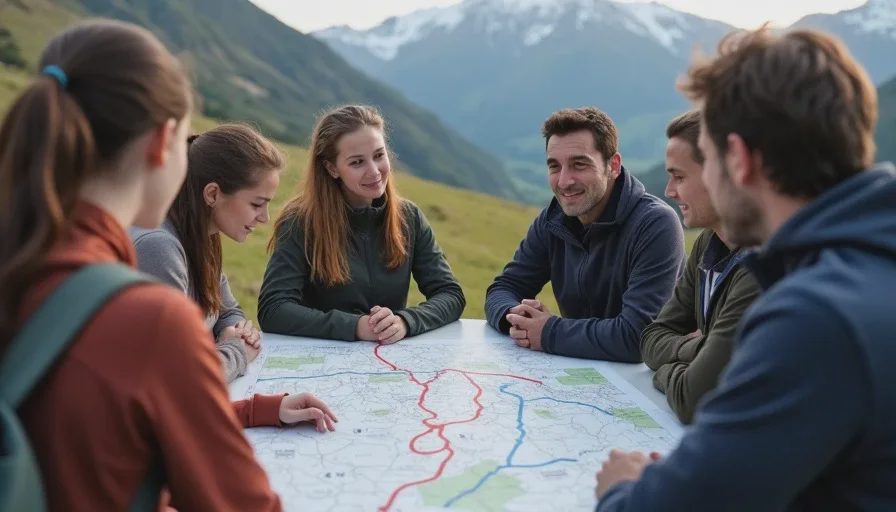
If you can't get the pace to slow down, drop back. Let the fast group go ahead. Set your own pace. Enjoy the trail at your own speed. Catch up at the next meeting point.
This takes confidence. It means accepting that you'll be the slow one. It means being okay with not following the leader. But it's better than pushing too hard and getting into trouble.
Option 3: Take a Break
Stop. Take a break. Let the group get ahead. Then start again at your own pace. If the group is moving too fast, you don't have to move with them. You can take a moment to breathe. To assess. To decide what's best for you.
Option 4: Communicate Before the Trip
The best time to address the pace is before the trip starts. Agree on a pace. Agree on a style. "We'll go slow. We'll stop often. We'll make sure everyone is comfortable." It's easier to agree on a pace in a parking lot than it is to change the pace in the middle of a trail.
The Humble Pace
Here's what I've learned about setting the right pace.
The right pace is the one where everyone feels safe.
It's not the fastest. It's not the most efficient. It's the pace where the least experienced driver can keep up without stress. It's the pace where the group can stop and enjoy the scenery. It's the pace where the whole group experiences the trail together.
The right pace is adjustable.
It starts slow, then picks up as the group gets comfortable. It slows down in technical sections. It stops for breaks. It adapts to changing conditions. It's flexible.
The right pace is humble.
It's set by the group, not by one person. It's not about ego. It's about the collective experience. It's about bringing the whole group along—not leaving them behind to keep up.
A Story
I was running a trail in the Mojave Desert a few years ago. I was with a group of friends. Good group. Mixed experience. One of the guys was a fast driver. Very fast. He'd done the trail before and wanted to get through it quickly.
He took the lead. He set a pace that was comfortable for him. The rest of us followed.
I was in the back. I watched the group spread out. The fast driver at the front, the slower drivers struggling to keep up. It was a trail, not a race. But it felt like a race.
I pulled over. I let the group go ahead. I took a break. I looked at the map. I started again at my own pace. I caught up with the group at the end of the trail. They were waiting. They'd been waiting for a while.
"Where were you?" they asked.
"Enjoying the trail," I said. "You should try it."
The Bottom Line
Confidence is valuable. It's good to have a leader who knows the way. But confidence isn't a substitute for judgment. And a confident leader who sets the wrong pace is worse than no leader at all.
The best leader is the one who checks in with the group. Who adjusts the pace. Who makes sure everyone is comfortable. Who puts the group's experience above their own pride.
Confidence can set the pace. But humility should guide it. Competence should inform it. And the group should benefit from it.
The trail finds the weak point. Sometimes the weak point is the pace. If the pace is wrong, someone will pay the price. Make sure it's not your group.
— Travis
Flagstaff, Arizona
Quick Reference: Confidence vs. Leadership
Confident Driver | Good Leader |
|---|---|
Sets the pace too fast | Sets a pace that works for everyone |
Doesn't check in | Checks in with the group |
Ignores feedback | Adjusts based on feedback |
Prioritizes speed | Prioritizes the group's experience |
Makes quick decisions | Makes informed decisions |
Doesn't acknowledge weakness | Admits they don't know everything |

No comments yet — be the first to share a thought.