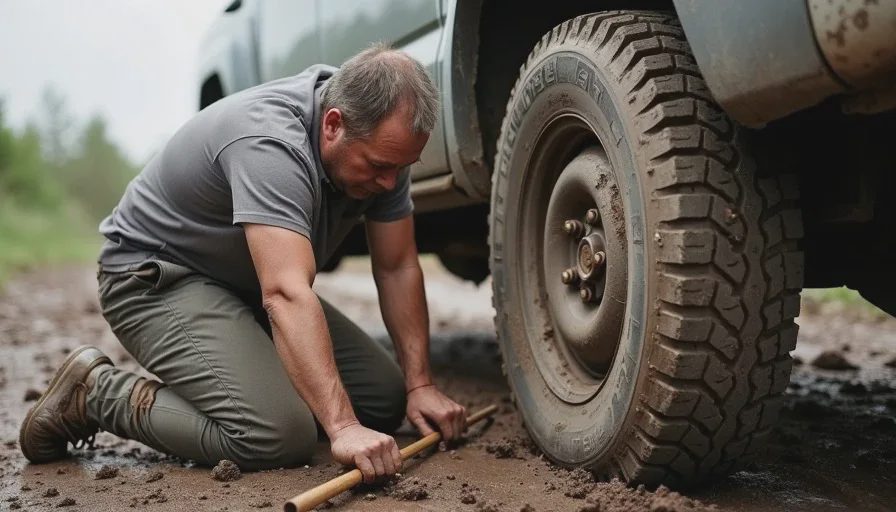
I spent six months telling anyone who would listen that my tires were fine.
"Best tires I've ever had," I'd say. "Quiet on the highway. Great in the dry. Look aggressive. Got a great deal on them."
People would ask me how they did in the wet. "Fine," I'd say. "Totally fine."
They weren't fine. I knew they weren't fine. But I'd spent good money on them. I'd read the reviews. I'd made a choice. And I wasn't ready to admit I'd made a bad one.
The trail forced me to admit it. The trail always does.
The Choice
I bought the tires because they looked right. Aggressive tread. Thick sidewalls. A brand name that sounded tough. They were on sale—a deal I couldn't pass up. I'd read the forum posts. A few people had complained about wet traction, but most people loved them. Good enough for me.
They went on the truck. They looked great. They felt great. On pavement, they were quiet and smooth. On dry dirt roads, they gripped just fine.
I was happy. I told myself I'd made a smart choice.
The First Signs
The first time I noticed something off was on a forest road after a light rain. Nothing major. Just a little mud on the surface. I hit a corner at moderate speed, and the rear end stepped out. Not a lot. Just enough to get my attention.
I thought, Huh. Must have hit a slick patch.
The second time was on a wet rock section. A simple climb. Nothing technical. I'd done it before on other tires without issue. This time, I spun. And spun. And spun. I had to back down and take a different line.
I thought, Must be the angle. Must be the dust on the rocks.
The third time was on a grassy slope. Wet grass. Gentle incline. A hill I could have walked up. I couldn't get traction. The tires just... gave up. I backed down, took a run at it, and barely made it. I was embarrassed. I was also in denial.
I thought, Grass is always slippery. That's not the tires.
The Defensiveness
I started defending them. Not to other people—to myself.
They're fine in most conditions. Every tire has a weakness. You can't expect perfection. They were a good deal. You made a smart choice.
I knew I was lying. I knew I'd made a mistake. But I didn't want to admit it. Admitting it meant admitting I'd wasted money. Admitting it meant I'd have to replace them. Admitting it meant I'd been wrong.
So I kept driving on them. Kept hoping they'd get better. Kept telling myself it wasn't that bad.
The Trail That Proved Me Wrong
It was a trail in the Pacific Northwest. A simple trail. A forest road that turned into a dirt track, then a rocky section, then a muddy section. Nothing I hadn't done a hundred times before.
It had rained the night before. The trail was wet. Not flooded. Just wet. Damp earth. Wet rocks. A few puddles. The kind of conditions that are normal for the PNW.
I hit the first muddy section and the truck started sliding. Not a little. A lot. The rear end was swinging like a pendulum. I was steering into the slide, countersteering, trying to find grip. It wasn't there. The tires were just... coasting. I was sliding on top of the mud like it was ice.
I finally stopped, got out, and looked at the tires. They were packed with mud. The tread was completely filled. The tires looked like racing slicks. There was no grip because the tread had filled and wasn't cleaning itself.
I spent an hour digging mud out of my tires with a stick. An hour. On a simple forest road. My daughter was in the truck, reading her book, waiting for me to finish. I was covered in mud, frustrated, and finally honest with myself.
These tires are terrible. I was wrong.
The Honest Assessment
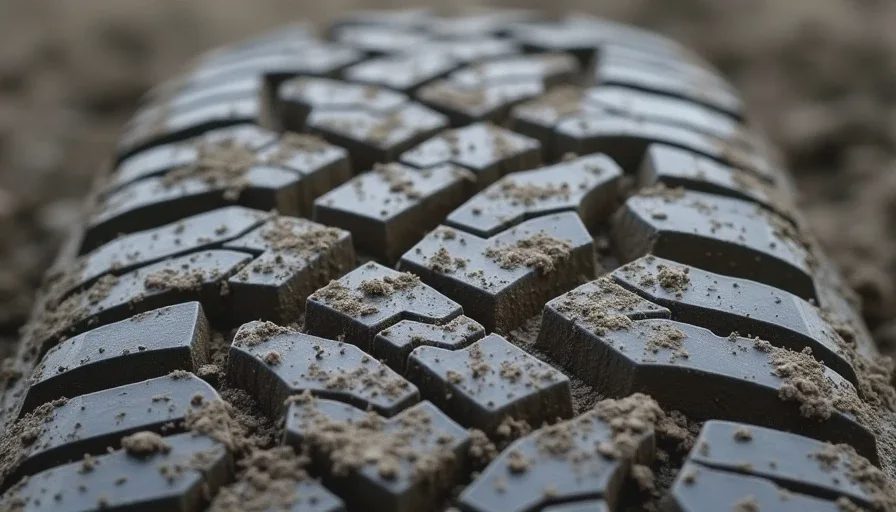
I stopped defending them. I stopped rationalizing. I looked at the tires honestly and made a list.
What I was telling myself:
They're fine in most conditions.
Every tire has a weakness.
They were a good deal.
What was actually true:
They were fine on pavement and dry dirt. That's not what I bought them for.
Every tire has a weakness. Their weakness was the primary condition I was driving in.
A good deal isn't a good deal if the tires don't work.
I'd bought the wrong tire for the terrain I was driving. It was that simple. I'd been seduced by the look, the price, and the online hype. I hadn't done the research. I hadn't been honest about my needs. And I'd been too stubborn to admit it when I realized I'd made a mistake.
What I Learned
That experience changed how I think about tires. Here's what I took away.
Know Your Terrain
I'd bought tires that were great for dry, rocky terrain. I was driving in wet, muddy terrain. That's not a tire problem. That's a judgment problem. It was a mismatch from the start.
What I do now: I think about the actual conditions I drive in, not the conditions I want to drive in. I'm honest about the terrain, the weather, and the season.
Don't Trust the Hype
I'd read the reviews. I'd seen the photos. Everyone seemed to love these tires. But I didn't ask the hard questions: Who are these people? Where are they driving? What's their standard? Just because they like them doesn't mean they're right for me.
What I do now: I look for reviews from people who drive in the same conditions I do. I'm skeptical of glowing reviews. I look for the complaints. The complaints are where the truth is.
The Price of a "Good Deal"
I'd saved a few hundred dollars on those tires. I spent more than that in frustration, lost time, and the eventual replacement. A good deal isn't a good deal if the product doesn't work.
What I do now: I buy the tire that's right for the conditions, regardless of the price. I don't compromise. I'd rather pay more up front than pay in frustration later.
The Cost of Stubbornness
The biggest cost wasn't the money. It was the stubbornness. I spent six months defending a bad choice. Six months of knowing I was wrong and refusing to admit it. Six months of making excuses. Six months of being less safe on the trail than I could have been. That's a lot of self-justification. And none of it was worth it.
What I do now: I try to be honest with myself. If I make a mistake, I admit it. I move on. I don't spend months defending a bad choice. It takes courage to replace something you bought recently. But it's also the right call.
The Replacement
I replaced the tires the next week. I bought a set that were designed for the terrain I actually drive. They didn't look as aggressive. They didn't sound as tough. They weren't on sale.
They were the right tires.
The first time I drove them in the rain, I felt the difference. The rear end stayed planted. The steering was predictable. I didn't slide. I didn't spin. I just... drove. It felt like a different truck.
The first time I hit a muddy section, the tread cleaned itself. The mud came out as the tires rotated. I didn't have to stop. I didn't have to dig. I just drove through. It was effortless.
I wondered why I'd waited so long.
The Lesson
Here's what I learned from a tire choice I defended for months until the trail proved me wrong.
The trail is the ultimate test. Not the reviews. Not the photos. Not the price. Not what you tell yourself. The trail. The trail will show you the truth. It doesn't matter how much you defend a choice. The trail doesn't care. The trail just presents reality.
Defensiveness is expensive. It costs you time. It costs you money. It costs you safety. It costs you your own respect. The moment you know you're wrong, act on it. Defensiveness doesn't help you. It just prolongs the mistake. The trail will still be there to prove you wrong when you're finally ready to listen.
The best gear is the gear that works where you actually drive. Not where you wish you drove. Not where you might drive someday. Where you actually drive. If you're honest about that from the start, you'll save yourself a lot of trouble.
Admitting a mistake is not failure. It's learning. It's the only way to get better. I learned more from that tire mistake than from any tire that worked perfectly. I learned about my own stubbornness. I learned about my own blind spots. I learned about my own judgment.
The Trail Finds the Weak Point
I tell people that phrase all the time. "The trail finds the weak point." And I mean it. But for a long time, I didn't apply it to myself.
I applied it to vehicles. To parts. To other people's builds. But I didn't apply it to my own choices. I didn't apply it to my own judgment.
That's the hardest thing about the trail. It's not just about finding weak points in your vehicle. It's about finding weak points in your judgment. And sometimes, your judgment is the weakest link. Sometimes, your judgment is the thing that needs an upgrade—more than any tire, any suspension, any gear you could buy.

No comments yet — be the first to share a thought.