
The canyon was narrow. Red sandstone walls rising on both sides, close enough that I couldn't fully open my driver's door. The trail was a ribbon of sand and scattered rock, beautiful in the late afternoon light. I was two hours from pavement. My daughter was in the passenger seat, fifteen years old, quietly reading a book she'd brought along.
We were having a good day. The kind of day that makes you forget why you ever stay home.
Then I felt it. A subtle clunk from the front end. Not loud. Not violent. Just a thunk through the steering wheel, like something had shifted half an inch and settled into a new position.
I stopped. Got out. Looked underneath.
The lower control arm mount on the passenger side had torn clean through the frame. Not cracked. Not bent. Torn. The metal had fatigued, then failed, and the control arm was now held in place by nothing but the sway bar link and sheer optimism.
We were stuck. Two hours from pavement. No cell signal. A bent tie rod, twelve miles left, and the wrong spare plan.
The Install
I'd installed that lift kit myself. In my garage. On a Saturday. With a beer in one hand and YouTube on the tablet.
It was a good kit. Reputable brand. Well-reviewed. I'd done my research. But I'd made a decision that day that I'd made a hundred times before.
I torqued a few bolts to "good enough." I reused a couple of factory bolts that the instructions said to replace. I didn't clean the mounting surfaces perfectly. I figured it would be fine.
It was fine for a while. A year, actually. A year of forest roads, desert trails, and the occasional rocky section. I'd checked the bolts a few times. They seemed tight. I'd even had an alignment done, and the shop didn't mention anything.
But I'd missed something. The frame mount was slowly fatiguing. The control arm was moving, just a fraction of a millimeter, every time I hit a bump. Over time, that movement weakened the metal.
The trail found the weak point. And the weak point was my install work.
The Wait

We sat there for four hours. Me, my daughter, and a broken truck in a beautiful canyon.
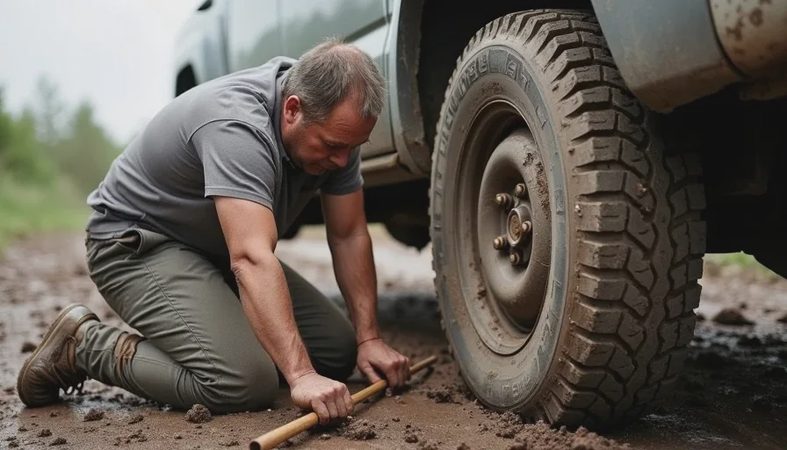
I tried a field repair. I had a ratchet strap and some baling wire in the back—a holdover from my old truck days. I cinched the control arm into roughly the right position, tightened everything I could, and tried to crawl forward.
The strap snapped after twenty yards.
I tried again with a tow strap. That held for fifty yards before it started fraying on the rock.
My daughter watched me work. She didn't complain. She didn't panic. She just sat on the tailgate, reading her book, occasionally asking if I needed help.
I wanted to say no. I wanted to be the hero. The dad who fixes everything.
Instead, I said yes. She held the light. She handed me tools. She asked good questions: What's that part do? How do you know it's broken? Is it dangerous?
By the third attempt, we'd moved the truck maybe a hundred yards. The canyon was getting darker. The air was getting colder.
And I realized I'd made a mistake. Not just in the install. In the trip planning. In the gear choice. In the whole damn thing.
I should have turned around when I first felt the clunk. I should have stopped, assessed, and walked out for help. But I was stubborn. I was embarrassed. I wanted to fix it myself.
Instead, I made the situation worse. The strap snapped and whipped into the fender, taking a chunk of paint. The tow strap shredded and left synthetic fiber all over the rocks. I'd turned a bad situation into a worse one.
The Rescue
A group of two trucks came through about an hour before sunset. They were locals. Hunters. They knew the area and they knew the terrain.
They winched me onto a flat spot, helped me secure the control arm with a combination of their straps and my ratchet straps, and then I limped the truck out at five miles per hour. Two hours of white-knuckle driving. Every bump felt like the end.
We made it to pavement. I had the truck towed to a shop. Three weeks and a frame weld later, it was back on the road.
The bill was $2,800.
The lesson was priceless.
What I Learned
That failure changed how I work. It changed how I judge. It changed what I'm willing to accept from myself and from the people who work on my truck.
Here's what I learned.
Torque Specs Aren't Suggestions
I used to treat torque specs as a guideline. Get it close. Use the German torque spec—gudentite. Close enough.
That's not how it works. Those numbers are there for a reason. Too loose and things move. Too tight and you stretch the threads or weaken the metal.
Now I use a torque wrench on every critical bolt. I check the specs. I clean the threads. I use thread locker where it's called for.
It takes more time. It's not glamorous. But it's right.
Cleaning Matters
The mounting surfaces on the frame were dirty. Light rust. Some old dirt. I'd scraped them with a wire brush, but I hadn't really cleaned them.
That dirt prevented the control arm mount from sitting flush. It created a gap. The gap allowed movement. The movement caused fatigue.
Now I clean every surface. Wire brush, degreaser, a rag, then a wire brush again. If it's not clean enough to eat off, it's not clean enough to bolt to.
Replace Fasteners
I reused the factory bolts on that install. They were fine, I told myself. They looked fine.
But bolts stretch. They fatigue. They lose their clamping force over time. That's why the instructions said to replace them.
Now I buy new bolts for every install. I use the correct grade. I throw the old ones away.
It's an extra $30. Cheap insurance.
Check Your Work, Then Check It Again
I checked those bolts a few times after the install. I'd crawl under the truck, give them a tug, and call it good.
But I never checked the mounting surfaces. I never looked for signs of movement. I never paid attention to the frame itself.
Now I inspect everything. Not just the bolts. The brackets. The welds. The frame. I look for signs of stress, movement, or fatigue.
Don't Trust Your Own Assumptions
The biggest lesson was about my own judgment. I assumed the install was good because I'd done a hundred installs before. I assumed the truck was fine because I'd driven it for a year without issues.
Those assumptions almost got us stranded overnight.
Now I treat every install like it's the first one. I read the instructions. I don't skip steps. I don't assume anything.
The Deeper Lesson
That failure wasn't really about a control arm mount. It was about trust.
I stopped trusting my own "good enough." I stopped trusting that I could half-ass something and get away with it. I stopped trusting that the trail would cut me some slack.
The trail doesn't cut slack.
The trail doesn't care that I was tired, busy, or just trying to get the job done. The trail doesn't care that I had a beer in my hand or a podcast playing. The trail doesn't care that I'd done the same install a hundred times before.
The trail cares about one thing: is it right?
If it's not right, the trail will find out.
How It Changed My Approach
I carry more now. More tools. More spare parts. A better field repair kit. But the biggest change isn't in the gear. It's in how I think.
Before a Trip
I do a full inspection now. Not a walk-around. A real inspection. I put the truck on jack stands. I crawl underneath. I check every bolt, every mount, every bushing, every line.
It takes two hours. It's boring. It's necessary.
During an Install
I work slower now. I don't rush. I don't cut corners. If I need a part, I buy the right one. If I need a tool, I stop and get it. If I'm tired, I walk away and come back fresh.
On the Trail
I listen to the truck now. Not just for big noises. For the little ones. The subtle shifts. The changes in feel.
That clunk in the canyon was subtle. I almost dismissed it. Now I stop when I feel something off. I get out. I look. I ask questions.
What I'd Tell You
If you're reading this and thinking, "Yeah, but it'll be fine," I've been there. I've said that. I've been wrong.
Don't be me.
Torque your bolts. Properly. With a torque wrench.
Clean your surfaces. Then clean them again.
Replace the fasteners. The instructions say to replace them for a reason.
Inspect your work. Not once. Twice. Three times.
Test your gear. Don't assume it works. Use it.
If something feels off, stop. Find out what it is before it finds you.
No comments yet — be the first to share a thought.