Let me tell you about a guy named Mike.
Mike was a good driver. Ten years of trail experience. A built Jeep with lockers front and rear. A winch he actually knew how to use. He'd run the Rubicon twice, Moab three times, and a dozen other famous trails across the West.
He was the kind of guy everyone wanted to wheel with. Confident. Capable. Calm under pressure.
Then one Saturday morning, he rolled his Jeep thirty feet down a hillside in the San Juan Mountains. Total loss. Four broken ribs. A helicopter ride he still can't afford.
Why? Because he looked at a weather forecast that said "scattered showers" and decided that meant "no problem."
The forecast was wrong. The rain came early. The trail turned to slick mud. His tires—perfect for Moab sandstone—became skis. He lost traction on a switchback, slid sideways, and couldn't stop.
Mike didn't fail because he was a bad driver. He failed because his risk calculation was wrong.
Here's the thing about risk: It's not about how good you are. It's about how honest you are.
The Risk Framework
Over the years, I've developed a framework for deciding whether a route is worth the risk on any given weekend. It's not complicated, but it requires honesty. Brutal honesty. The kind that makes you admit that maybe—just maybe—this isn't the weekend for that trail.
Here's how I think through it.
Step One: The Fundamentals
Before I even look at the trail, I look at three things. These are the non-negotiables. If any of these are off, I don't go. Period.
1. Vehicle Condition
Is my vehicle ready? And I don't mean "I think it's fine." I mean the fluids are fresh. The brakes are good. The tires have tread and appropriate pressure. The spare is aired up and accessible. The recovery gear is packed and properly stowed.
I've shown up at trailheads with a cracked windshield, a slow tire leak, and a sketchy serpentine belt. I've never regretted turning around. I have regretted pushing forward when I knew something was off.
The question: Is my vehicle as ready as I can make it? If the answer is anything other than a firm yes, the route isn't worth the risk.
2. Trail Conditions
What do I actually know about this trail? Not what I hope. Not what I remember from three years ago. Not what a YouTube video showed in perfect summer conditions.
I check current conditions. Forums. Local Forest Service or BLM websites. Trip reports from the last week. Weather forecasts from multiple sources.
If the trail is wet and it's a clay-based route, I'm out. If there's snow in the forecast above 8,000 feet and I'm heading to 9,500, I'm rethinking. If the road is closed or damaged, I don't try to find a workaround.
The question: Do I know what I'm getting into? Hope and memory are not data. Current conditions are.
3. The Vehicle-Terrain Match
This one is personal. I can't drive a full-size truck through a narrow shelf road. I can't take a 2WD crossover into deep mud. I can't run a stock suspension on a trail that needs 12 inches of clearance.
I know what my vehicle can do. More importantly, I know what it can't do. And I'm honest about that gap.
The question: Is my vehicle actually suited to this trail? Not "can I make it work if I try hard." Actually suited. Honest answer only.
Step Two: The Variables
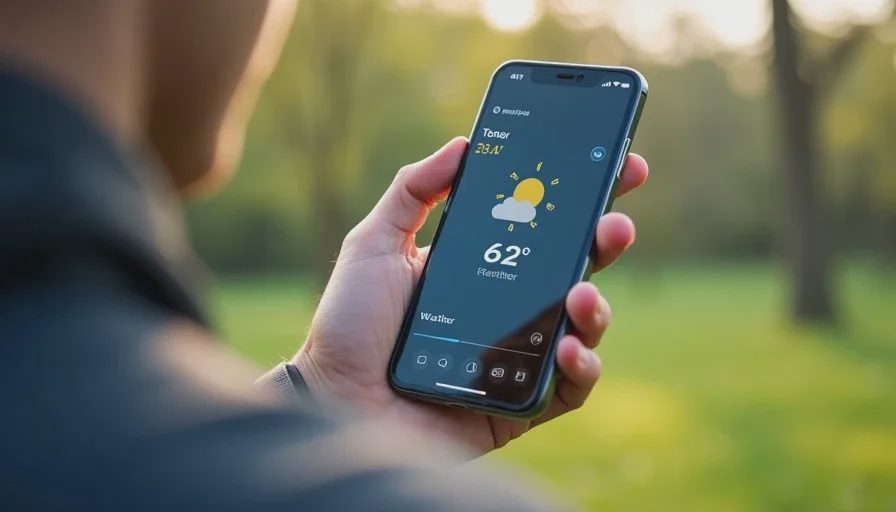
Once the fundamentals are solid, I look at the variables. These are the things that can change a manageable route into a dangerous one.
Weather Window
The weather is the biggest variable. It's also the most unpredictable. I've seen clear skies turn into thunderstorms in forty-five minutes. I've seen September afternoons bring early snow.
So I look at the window. Not just the forecast for the whole weekend. The forecast for the hours I'll actually be on the trail.
Is there a chance of rain during the window? How big? What kind? A half-inch of rain on a granite trail is very different from a half-inch of rain on a clay trail. One is a minor nuisance. The other is a complete shutdown.
I also look at temperature. If it's below freezing at night and I'm camping, did I pack for that? Does my sleeping bag actually handle those temps? Am I prepared for frozen water lines? Frozen boots? Frozen recovery gear that won't stretch?
My rule: If the forecast shows a 30% chance of significant precipitation during my trail window, I either adjust my timing or change my route. It's not that I'm afraid of weather. It's that I respect what it can do to a vehicle and a driver.
Time Buffer
Daylight is finite. Help is finite. Mechanical sympathy is finite.
I calculate how long the trail should take. Then I add 50%. That's my buffer. If I can't complete the route within that buffer time, I'm pushing it.
And I never—ever—start a trail without a clear idea of the exit strategy. If things go wrong, how do I get out? Is there a cell signal? A nearby town? A friend who knows where I am?
My rule: If I can't finish the trail in daylight with a generous buffer, I'm not starting it. Night driving on unknown terrain is an unnecessary risk. It's not a badge of honor. It's poor planning.
Group and Solo Risk
A group is safer than solo in almost every scenario. More help. More resources. More ideas.
But a group can also push you into risks you wouldn't take alone. Social pressure is real. You don't want to be the one who chickens out. You don't want to slow everyone down. So you push forward when you should turn around.
And a group is only as strong as its weakest member. If I'm with someone who's underskilled, undermaintained, or overconfident, the whole group's risk goes up. People follow—because they don't want to be left behind, because they trust the leader, because they feel invincible in a pack. That's how you end up with a four-car recovery in the dark.
If I'm going solo, my decision-making is even more conservative. No one is pulling me out if I get stuck. No one is running for help. Every decision carries more weight. I carry more gear. I leave more detailed travel plans with someone who cares. I check in more regularly. I don't push.
My rule: Solo trips get a 50% risk discount. If a route feels like a 6 out of 10 with a group, it's a 9 out of 10 solo. Adjust accordingly.
Step Three: The Commitment Point
Every trail has a commitment point. The point where it's easier to keep going than to turn around. The point where the risk has escalated beyond what you planned for.
The key is recognizing that point before you cross it.
I've learned to ask myself a question at the beginning of every trail. It's a simple one:
"What would make me turn around today?"
I answer it before I start. It could be a particular obstacle. A weather condition. A mechanical issue. A time of day.
And then—and this is the hard part—I honor that answer. I don't move the goalposts when I'm halfway in. I don't say "well, it's not that bad yet." I trust the decision I made when I was clear-headed and not invested in the trail.
The Honesty Check
This is the hardest part of the framework. It's not about whether you can do the trail. It's about whether you should.
Be honest with yourself about the following:
Skill
I've driven for fifteen years, but that doesn't mean I'm a world-class off-road driver. I'm competent. I know my limits. And I'm honest about what I haven't done before.
If a trail requires a skill I don't have, I don't wing it. I find a way to practice. I go with someone who knows the skill. Or I choose a different route.
Hard question: Have I actually done this type of driving before? Not "I've driven on dirt roads." Actually done. Rocks, mud, sand, snow, or whatever the trail demands.
Gear
This is about more than recovery gear. It's about basic survival. Water. Food. Shelter. Communication.
If I'm going remote, I carry enough to spend a night if I have to. Enough water to share. A satellite communicator or beacon if there's no cell signal. A paper map with the route marked.
And I know how to use all of it. I've practiced with the satellite messenger. I've set up the tent in the dark. I've started a fire in the rain.
Hard question: If everything goes wrong, do I have what I need—and the knowledge to use it—to get through the night? Be honest. Gear you haven't tested is just a heavy burden.
Vehicle Condition
Is the vehicle actually ready? Or have I been ignoring that noise from the rear diff? Is that tire patch temporary or permanent? Am I carrying weight that's going to break a leaf spring?
Hard question: What would I fix if I had a week before this trip? Fix that. Wait a week. Don't go this weekend.
The Decision Matrix
I use a mental grid to evaluate routes. It's not a perfect science, but it keeps me honest.
Factor | Red Flag | Proceed with Caution | Green Light |
|---|---|---|---|
Weather forecast | >50% precip | 20-50% precip | <20% precip |
Daylight buffer | <2 hours extra | 2-4 hours extra | >4 hours extra |
Trail difficulty | Beyond my skill | At the edge of my skill | Well within my skill |
Vehicle readiness | Known issue unresolved | Minor issues resolved | Fully maintained |
Group dynamic | Mixed skill, unknown | Known group, mixed skill | Solid group, matched skill |
Exit plan | No exit strategy | Vague exit strategy | Clear, tested exit strategy |
Honesty check | I'm rationalizing | I'm hesitant | I'm confident |
If I hit a red flag in more than one category, I'm out. If I'm in the caution zone in multiple categories, I'm rethinking. I want greens across the board before I commit.
When to Turn Around
Here are the moments when I've turned around. Every one of them felt bad in the moment. Every one of them was the right call.
The First Sign of Trouble
If something goes wrong in the first hour, I consider turning around. It's not that the trouble itself is always major. It's that it's a signal. A message from the universe, your vehicle, or the trail itself: something is off.
Weather Turns Earlier Than Expected
If the forecast says rain at 4 PM and it's raining at noon, I'm out. The trail is only going to get worse. The window has closed.
The Trail Is Harder Than Expected
If I'm struggling in the first mile, the next ten aren't going to get easier. I've turned around after a hundred yards when I realized I'd underestimated the terrain. It felt like giving up. It was actually smart.
Equipment Fails
A broken strap. A leaking tire. A warning light on the dash. If something fails early, it's a sign of deeper issues. I don't push through. I turn around.
My Gut Says No
This one is the hardest to explain. Sometimes you just know. You have a feeling. A sense that something is off. I've learned to listen to that feeling. It has saved my skin more than once.
A Real Example
Last spring, I was planning a weekend run through the Maze District in Canyonlands. I'd done it before. I knew the route. I had the gear.
But the forecast was iffy. Thirty percent chance of rain. Not bad, not great. My truck had a small coolant leak I'd been meaning to fix. Nothing major. Just a slow weep.
I wanted to go. I really wanted to go. The Maze is spectacular in spring.
But I ran the framework. The weather was in the caution zone. The coolant leak was a red flag. The group was solid, but one of the trucks was new to the driver. The exit plan was vague—we'd figure it out when we got there.
I called it off. Stayed home. Fixed the leak. Waited for better weather.
The guys who went ended up stuck in mud for eight hours. One of them bent a tie rod trying to get out. They made it home, but it was a rough weekend.
I made the right call. Not because I'm a genius. Because I followed the framework and was honest about the variables.

No comments yet — be the first to share a thought.