My daughter was seven the first time she rode shotgun on a serious trail. We were somewhere in the San Juan Mountains, crawling along a shelf road with a thousand-foot drop on one side and a rock wall on the other. I was focused. Gripping the wheel. Watching my line. Checking the mirrors. Calculating angles. The whole adult-brain thing.
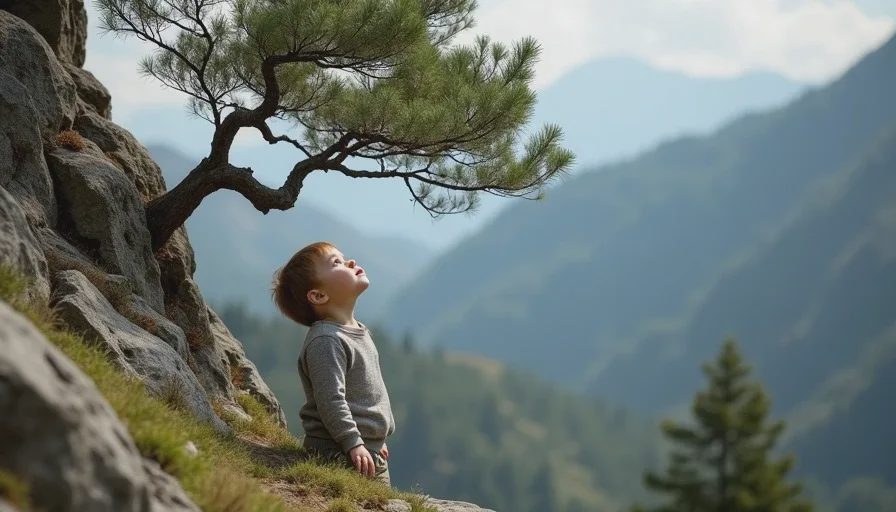
She was quiet for a long time. Then she said, "Dad, look at that tree."
I glanced over. A pine tree. Bent and twisted, growing sideways out of a crack in the rock face. Nothing special. Just another tree surviving where it shouldn't.
"Cool, honey," I said. Kept driving.
She was quiet again. Then: "How old do you think it is?"
I didn't know. I hadn't thought about it. I was too busy thinking about the trail.
That moment stuck with me. Not because I remembered the tree—I didn't. But because I remembered the question. She was seeing something I'd completely missed. Something that mattered to her. Something that made the trail more than just a route to be conquered.
The Speed of Adults
Here's the thing about adults on the trail. We're always moving. We're planning the next turn, the next obstacle, the next camp. We're thinking about time, distance, fuel, and whether we packed enough water. We're measuring the trail by progress.
Kids don't measure the trail that way. They experience it.
For an adult, a trail is a line on a map from Point A to Point B. For a kid, a trail is a collection of moments, each one interesting in its own right. The rock that looks like a turtle. The puddle that's perfect for splashing. The bird that's doing something funny.
Kids aren't trying to cover distance. They're trying to cover experience.
What They Notice That We Don't
I've been paying attention for a few years now. Here's what my kids notice on the trail that I almost always miss.
The Small Creatures
I see deer. Elk. Maybe a coyote if I'm lucky. The big stuff. The stuff that moves.
My kids see the small stuff. A beetle crossing the dirt. A lizard sunning itself on a rock. A spiderweb stretched between two branches, dew still on it. A butterfly that's not like the ones at home. Tracks in the mud—not mountain lion tracks, but the tiny footprints of a mouse or a chipmunk.
They'll stop for ten minutes to watch an ant colony. I'd have walked right past it. They see a whole world in that tiny pile of dirt.
What they'd say: "Dad, look! They're working together. Where are they going? Why are they carrying that leaf?"
What I'd miss: The microscopic life of the trail. The small dramas happening at our feet while we're looking at the big picture.
The Shapes of Things
My daughter sees faces in rocks. My son sees dinosaurs in fallen logs. They see shapes in the clouds, patterns in the sand, colors in the rock layers that I'd call "brown" and they'd call "burnt sienna, and rust, and that one's almost purple."
They notice the texture of things. The way a sandstone cliff feels rough and warm. The way a river rock is smooth and cool. The way pine bark peels in strips like paper.
I look at a rock and see an obstacle. They look at a rock and see a story.
What they'd say: "This one feels like it's been here forever. How did it get here? Was it part of a mountain once?"
What I'd miss: The story of the landscape. The geology, the history, the slow changes that made the trail what it is. Kids are natural geologists. They just don't know the word for it.
The Changes
I notice if the trail is getting harder. If the weather is turning. If we're losing daylight.
My kids notice if the trees are changing. If the air smells different. If the sky is a different blue than it was an hour ago. They notice the transitions—the places where one kind of landscape becomes another.
I drive through a pass and think, "We made it." They drive through a pass and think, "Look, the trees are different here." And they're right. The vegetation changes. The rocks change. The whole feel of the place changes. I'm too busy driving to see it.
What they'd say: "The air feels different. It's thinner. And the trees are smaller. Why are the trees smaller?"
What I'd miss: The subtle transitions of the landscape. The way the trail changes not just in difficulty but in character.
The Silence
I've always thought I appreciated the quiet of the backcountry. I do. But I appreciate it in an adult way. I'm resting. I'm recovering. I'm letting the noise of my brain settle.
My kids experience silence differently. They notice it. They feel it. They let it fill the space around them. They don't try to fill it with words.
Once, on a desert night, my daughter said, "The sky is so loud."
I was confused. The sky is quiet. What are you talking about?
She pointed up. "The stars. There are so many. It's so loud. It's like noise but in your eyes."
She was describing something I'd felt but never said. The overwhelming immensity of a dark sky full of stars. The way it's not just visual—it's almost physical. Like you could feel the weight of all that space pressing down on you.
What they'd say: Nothing, sometimes. Or something that sounds like nonsense. But it's never nonsense. It's a different language for a different way of seeing.
What I'd miss: The experience of presence. The way the world feels when you're not trying to measure it.
The Mountain Experience
When I was a kid, my dad took me backpacking in the Wind River Range. Ten days. No trail, just a map and a compass. I don't remember the miles. I remember the sky. The stars were so bright, I could see the reflection of the constellations in the clear, cold lakes. I remember the feeling of walking through a meadow full of wildflowers, the scent of wet grass and pine on the wind. I remember the taste of the water—straight from a glacier, so cold it made my teeth ache.
I asked my dad years later what he remembered about that trip. He said, "I remember how slow we went. How you kept stopping to look at things. I was worried about making it to the next camp, but you were just... there."
That's the thing. Adults are always worried. Kids are always present.
What We Adults Miss
Here's the list I've compiled from years of paying attention.
We miss the small stuff. The bug, the flower, the footprint. We're looking at the big picture—the trail, the terrain, the progress. We forget that the big picture is made of small stuff.
We miss the changes. The way the air smells different after a rain. The way the light changes in the afternoon. The way the trail feels different under our feet as the surface changes.
We miss the questions. Kids ask why. Adults tell them why, then move on. But the questions are the point. The questions are where the learning happens. When we skip the questions, we skip the experience.
We miss the pace. We're always moving. We have a schedule. A destination. We're trying to get there. Kids are already there. They're not trying to get anywhere. They're somewhere. Right now. And they want to stay there until they're done with it.
We miss the joy. The joy of a puddle. The joy of a rock that looks like a turtle. The joy of finding a cool stick. We're too busy being serious to be joyful. Kids haven't learned that yet.
How It Changed My Driving
After that trip when my daughter asked about the tree, I started to change.
I stopped driving so fast. Not just speed, but mental speed. I stopped trying to make progress and started trying to make experience.
I stopped getting frustrated when my son wanted to stop and look at a snake. I stopped rushing my daughter past a viewpoint she wanted to study.
I started asking questions instead of answering them. "What do you see? What do you notice? What do you think happened here?"
I started stopping. Just stopping. For no reason except to look. To listen. To be there.
The trips got longer. We covered less ground. I cared less about the route and more about the moment.
And I started seeing things I'd missed for years.
What the Trail Taught Me
The trail taught me that a route is not a goal. It's a medium. A way to move through a place. If you're only paying attention to the route, you're missing the place. You're just traveling. You're not experiencing.
The trail taught me that kids are not just along for the ride. They're the ones who show you how to see. If you let them, they'll point out things you would have missed. They'll ask questions you never thought of. They'll slow you down to the speed of wonder.
The trail taught me that the best trips aren't the ones where you made the most miles. They're the ones where you made the most memories. The ones where something surprising happened. The ones where you connected with the place instead of just passing through.
What I'd Tell You
If you're taking kids on the trail:
Slow down. They're not in a hurry. Don't make them be in a hurry.
Stop. A lot. For no reason. Just stop and look around. Ask them what they see.
Follow their questions. If they ask why, don't just give an answer. Ask them what they think. Ask them what they're wondering. The question is more important than the answer.
Let them lead sometimes. Let them choose the route. Let them set the pace. Let them decide when to stop. They might notice things you don't see.
Don't correct their observations. If they say "the sky is loud," don't say "the sky is quiet." They're not wrong. They're seeing something you're not.
Put the camera down. Or use it less. Watch the trail with your eyes, not your screen. The memories will be better.
Don't be too serious. The trail is supposed to be fun. If you're worried about making progress, you're missing the point.
A Story
We took my youngest son on his first trail run when he was six. Just a day trip. A forest road, some dirt, a couple of small creek crossings. Nothing major.
He got out of the truck at the first creek crossing. He didn't say anything. He just walked over to the water and stared at it. I let him. I was in the water, gauging the depth, picking a line, doing all the "work" of crossing.
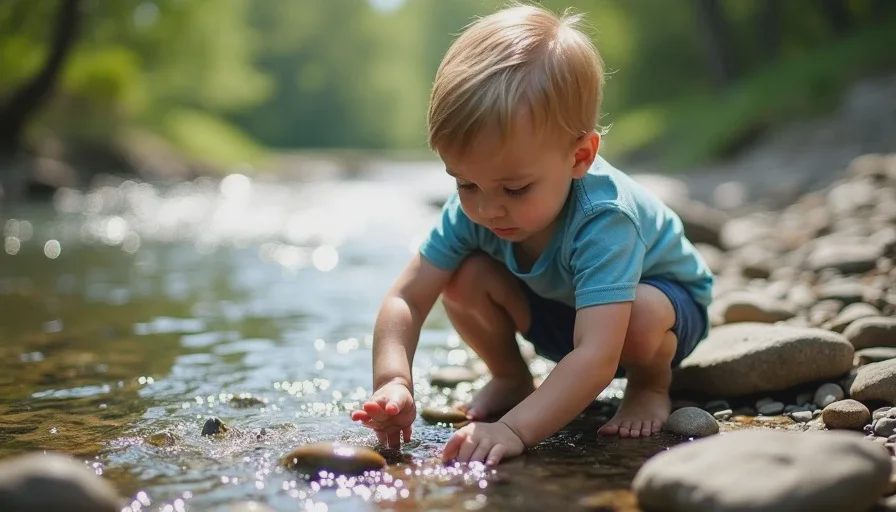
He called me over. "Dad, look at the rocks at the bottom."
I walked over. The creek was only a few inches deep. The rocks on the bottom were smooth, worn by the flow over who knows how many years. Some of them were perfect. Round. Smooth. Beautiful, really.
I'd have driven right over them. I'd have splashed through the creek and never noticed a single one. But he noticed them. He knelt down and picked up a handful, turning them over, looking at them like they were treasure.
They were treasure. He was right.
He's fourteen now. He still picks up rocks on every trail. I have a whole box of them in the garage. They sit there like a collection, souvenirs from every trip we've taken. They tell a story of where we've been and what we've seen—the small things that made the big days matter.
No comments yet — be the first to share a thought.