I watched a guy named Eric load his Tacoma for a weeklong trip through southern Utah. He had a rooftop tent. A full awning room. A 12-volt fridge. Two spare tires. A full-size Hi-Lift jack mounted to the hood. A 5-gallon Rotopax fuel can. Another 5-gallon water can. Recovery gear. Camp chairs. A table. An axe. A shovel. A chainsaw. Two duffel bags. A cooler full of food. And his girlfriend, who weighed maybe 120 pounds soaking wet.
The truck looked epic. Straight out of an overlanding magazine.
The rear leaf springs were already sagging before he pulled out of the driveway.
Eric made it to the trailhead. He made it about three miles into the trail. Then the rear axle hit the bump stop on a mild dip. The transmission temperature hit 240 degrees on the next climb. The brakes faded on a downhill section. The tires were chunking on the rocks because they were overloaded and under-inflated.
He didn't complete the trip. He limped back to pavement, parked the truck, and spent the weekend in a motel.
The cost of carrying too much weight isn't just about fuel economy. It's about everything. Everything.
What Weight Actually Does
Weight isn't just a number on a spec sheet. It's a force that affects every single system on your vehicle. When you drive off pavement, those forces multiply. The bumpy road exaggerates every pound you carry. The steep grade stresses every component that supports that weight.
Here's what weight is really doing to your vehicle.
Suspension: The First to Suffer
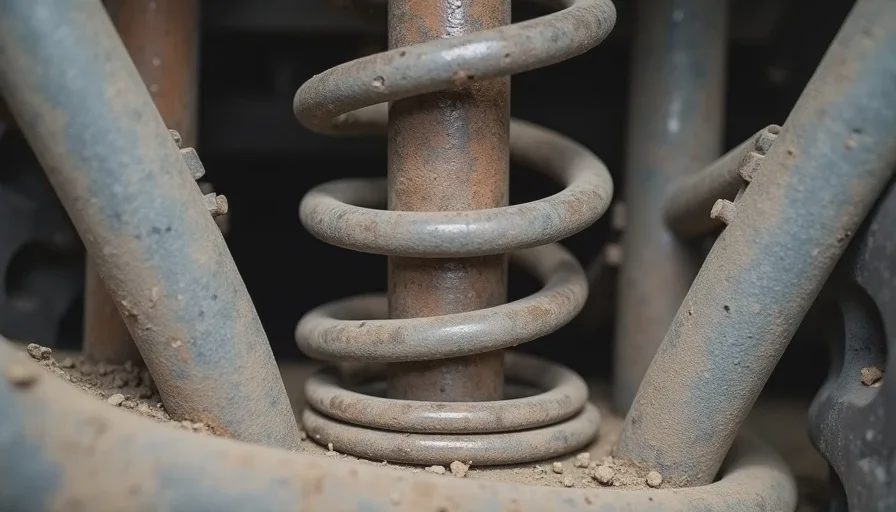
Your suspension is designed to carry a specific amount of weight. That weight includes the vehicle itself, passengers, cargo, and anything else you bolt onto it. If you exceed that weight, the suspension can't do its job. It sags. It bottoms out. It runs out of travel before the tire can absorb the bump.
What happens when you overload your suspension:
Reduced travel. The suspension sits lower in its stroke, leaving less room to absorb bumps. Every dip becomes a bone-jarring hit.
Bottoming out. The axle hits the bump stop, sending a shock through the chassis, your spine, and every component in between.
Increased stress on components. Control arms, bushings, ball joints, and springs all work harder than they should. They wear out faster. They break more often.
Poor handling. The vehicle becomes tippy, unpredictable, and harder to control. Body roll increases. Cornering feels vague. Emergency maneuvers become risky.
Alignment issues. Sagging suspension changes the geometry of the steering and suspension, leading to uneven tire wear, pulling, and vague steering.
How to manage it:
Know your vehicle's payload capacity. It's on a sticker in the driver's door jamb.
Weigh your vehicle loaded. Take it to a truck scale. See where you actually stand.
Upgrade your springs if you consistently carry more than the factory payload. But remember—that's a bandage, not a cure.
Distribute weight evenly, low and centered. Don't put heavy gear on the roof.
Brakes: The Underestimated Victim
Weight is the enemy of braking. A heavy vehicle requires more force to stop. More force means more heat. More heat means fading brakes. Fading brakes mean longer stopping distances. Longer stopping distances mean danger.
What happens when you overload your brakes:
Fade. Brake fluid boils, pads glaze, and the pedal goes soft. The brakes stop working as effectively.
Increased wear. Pads and rotors wear out faster. You'll be replacing them more often.
Longer stopping distances. The most dangerous consequence. You'll need more space to stop on pavement. Off pavement, you may not stop at all.
Overheating. On long descents, overloaded brakes can overheat to the point of failure. You can lose your brakes entirely.
How to manage it:
Understand that weight affects braking more than any other factor.
Use engine braking on descents. Downshift. Use the compression of the engine to slow you down. Give your brakes a break.
Be more conservative off pavement. Braking on dirt, sand, or gravel is less effective than on pavement. Add weight, and the margin for error shrinks.
Consider upgraded brake pads and rotors if you routinely carry heavy loads.
Powertrain: Working in the Red Zone
Your engine, transmission, and differentials are designed to move a certain amount of weight. When you exceed that weight, they have to work harder. That means more heat. More wear. More potential for failure.
What happens when you overload your powertrain:
Transmission overheating. The transmission generates more heat under load. Off-pavement driving already produces less airflow. Together, it's a recipe for overheating. Hot transmission fluid breaks down, leading to slip, wear, and eventual failure.
Engine strain. The engine works harder to move the weight. More throttle, more fuel, more heat. Cooling systems that were marginal at highway speeds become inadequate on steep climbs.
Drivetrain wear. Differentials, axles, and driveshafts all see increased stress. U-joints wear faster. Ring and pinion gears can fail under sustained heavy load.
Reduced performance. The vehicle feels sluggish, slow, and unresponsive. You have to work harder to get it to do what you want.
How to manage it:
Check transmission temperature if you have a gauge. If you don't, consider adding one. Overheated transmission fluid is a silent killer.
Use lower gearing on climbs. Don't lug the engine. Let it rev and use the torque.
Monitor your coolant temperature. Watch for overheating on long climbs.
Service your transmission fluid more frequently if you carry heavy loads. Consult your owner's manual, then cut the interval in half.
Tires: The Point of Contact
Tires are the only thing connecting your vehicle to the ground. They carry all the weight you've added. They provide the traction you need. They absorb the impacts.
What happens when you overload your tires:
Increased wear. Overloaded tires wear out faster. The centers of the tread wear down first. The sidewalls flex more, generating heat.
Reduced traction. Overloaded tires have less grip. They slide more easily. They're harder to control. In sand, mud, or snow, they dig in rather than float.
Heat buildup. Overloaded tires generate heat. Heat causes the rubber to break down. Breakdown leads to blowouts.
Sidewall damage. Overloaded tires flex more, causing the sidewalls to weaken and crack. A blowout on a gravel road at speed is not something you want to experience.
How to manage it:
Check your tire pressure. Overloaded tires need more pressure to carry the weight. Under-inflated tires generate more heat and can fail catastrophically.
Match your tire to your load. Passenger-rated tires aren't designed for heavy loads. Consider load range E or higher if you consistently carry heavy weight.
Consider the terrain and speed. High speeds on hot days and rocky terrain are extra stressful. Slow down.
Inspect your tires regularly. Look for cracks, bulges, or uneven wear. Replace worn tires before they fail.
Body Roll and Instability: The Tipping Point
Weight changes the center of gravity of your vehicle. The higher you carry the weight, the more unstable the vehicle becomes. The more unstable the vehicle, the more likely it is to tip over in a corner, on a side slope, or during a sudden maneuver.
What happens when you raise the center of gravity:
Increased body roll. The vehicle leans more in corners. That lean can cause the suspension to bottom out on one side, leading to a loss of control.
Reduced stability on side slopes. The vehicle wants to tip over more easily. If one side of the truck is heavily loaded, the imbalance worsens.
Greater risk of rollover. Vehicles with rooftop tents, roof racks, or other high-mounted gear are inherently less stable. On an off-camber trail, that can be a dangerous combination.
How to manage it:
Keep heavy items low and centered in the vehicle.
Don't put heavy gear on the roof unless it's absolutely necessary.
Be aware of your center of gravity. The vehicle will feel different. Don't push it.
On side slopes, take your time, distribute weight evenly, and be conservative. If it feels sketchy, it is.
Fuel Economy: The Obvious Cost
Weight costs fuel. Every extra pound requires more energy to move. More energy means more fuel. More fuel means more stops. More stops mean more planning and more cost.
How much does it cost?
For every 100 pounds of added weight, fuel economy drops roughly 1-2%. Over a full tank, that adds up. Over a thousand-mile trip, it's real money.
The effect is more pronounced off pavement. In slow, demanding terrain, the engine works harder and burns more fuel.
How to manage it:
The most effective way to save fuel is to carry less.
Plan your fuel stops carefully.
Consider extra fuel storage only for extended remote trips.
The Hidden Costs
Beyond the mechanical and performance costs, there are hidden costs. These are the ones that add up over time.
Cost to Your Trip
A vehicle that's overloaded is a vehicle that's less fun to drive. You're stressed. You're worried about breaking something. You're not enjoying the trail. The trip becomes about managing the vehicle instead of experiencing the place.
Cost to Your Wallet
Overloaded vehicles break more often. Tires wear out faster. Suspension components need replacing. Brakes wear prematurely. Transmission repairs are expensive. Over the life of the vehicle, the costs add up.
Cost to Your Safety
Overloaded vehicles are more likely to get stuck, get into accidents, or break down in remote areas. The risk to you and your passengers is real.
Cost to the Environment
Overloaded vehicles consume more fuel. They generate more emissions. They cause more damage to trails.
The Weight Audit
Every vehicle has a limit. Here's how to understand where you are.
Step 1: Know Your Numbers
GVWR (Gross Vehicle Weight Rating): Maximum total weight your vehicle can safely carry. Includes vehicle, passengers, cargo, and fluids.
GCWR (Gross Combined Weight Rating): Maximum total weight of vehicle, cargo, passengers, and any trailer you're towing.
Payload: GVWR minus the vehicle's curb weight. The amount of weight you can carry in the vehicle.
GAWR (Gross Axle Weight Rating): Maximum weight each axle can carry.
Step 2: Weigh Your Vehicle
Take your loaded vehicle to a truck scale. Weigh the front axle separately from the rear axle.
Compare your actual weight to the ratings. If you're over, you need to reduce weight or upgrade components.
Step 3: Do a Packing Audit
Every time you come back from a trip, go through what you actually used. Make a pile of things you used. Another pile of things you didn't.
Next trip, leave the "didn't use" pile at home. Do this three times and your kit will shrink significantly. It's not about deprivation. It's about reality.
How to Reduce Weight
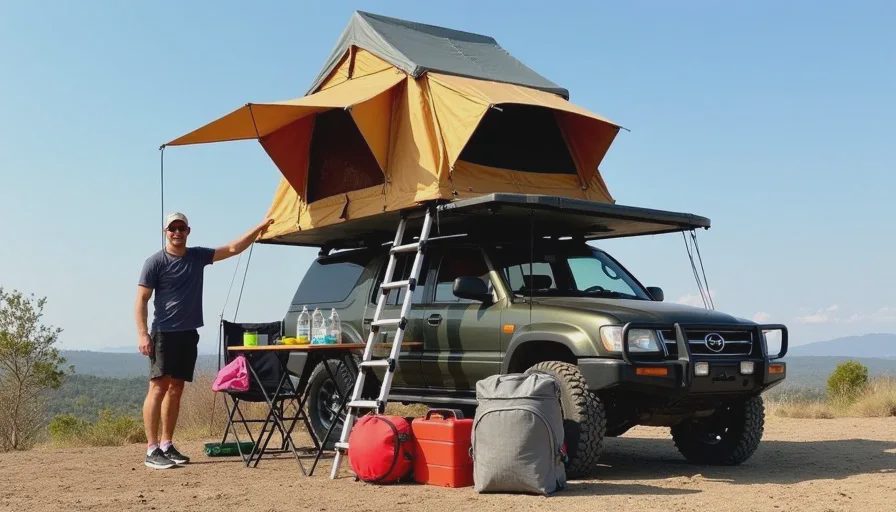
What to leave at home:
Extra camping chairs. One per person is enough.
Unused camp kitchen gear. Do you really need a Dutch oven, a cast iron skillet, a grill grate, and a pie iron? Pick your favorite and leave the rest.
Extra recovery gear. A full set of soft shackles is heavy. A full set of metal shackles is heavier. Most kits include more than you need.
Multiple spare tires. A single spare is enough for most weekend trips.
Unused tools. You don't need a full mechanics' set. Carry the basics and add as needed.
Unused clothing. You're camping, not attending a fashion show.
Extra fuel cans. Only carry what you need.
What to replace:
Swap heavy metal shackles for lighter soft shackles
Replace heavy fridges with high-quality coolers for shorter trips
Use aluminum or composite recovery boards instead of heavier plastic ones
Consider lightweight camping gear designed for backpacking
Skip the heavy rooftop tent if you don't really need it
What to relocate:
Move heavy gear low and centered
Keep heavy items off the roof
Distribute load evenly between axles
The Rule of Thumb
I'll tell you what I tell everyone who comes to me with an overland build.
Carry what you need. Need what you carry.
That's it. If you can't justify something on a trail you've already driven, it's probably extra weight.
If you're building for a specific trip, plan for that trip. Don't build for a trip you're not taking. Don't build for a disaster that's unlikely to happen.
The trail is about experiencing the backcountry, the terrain, the sky, the silence. Not carrying a catalog. The best vehicle is the one you trust—the one that's not a burden to drive, but a joy to be in. Comfort and reliability are the real goals, not impressiveness.
A True Story
I know a guy who sold his built-overland rig after one trip. He'd spent $40,000 on the build. Rooftop tent, full kitchen, dual batteries, solar panels, air compressor, recovery gear, the works.
His first trip was a weekend on a forest road. Nothing extreme. Just a dirt road with a few hills. He was so worried about his build that he couldn't enjoy the trip. Every clunk was a potential failure. Every dip was a potential bottom-out. He spent the whole time stressed.
He sold it and bought a stock truck. He took that truck on the same trail the next weekend and loved every minute.
The gear wasn't the problem. The judgment was.
The trail finds the weak point. Sometimes that weak point isn't the suspension. It's the judgment behind the build.
— Travis
Flagstaff, Arizona
Quick Reference: Weight Checklist
Item | Impact of Overload |
|---|---|
Suspension | Sagging, bottoming out, component failure |
Brakes | Fade, longer stopping distances, failure on descents |
Transmission | Overheating, fluid breakdown, failure |
Engine | Strain, overheating, reduced power |
Tires | Faster wear, heat buildup, blowouts |
Body roll | Instability, increased risk of rollover |
Fuel economy | Decreased range, more stops |
Trip | Less fun, more stress |
No comments yet — be the first to share a thought.