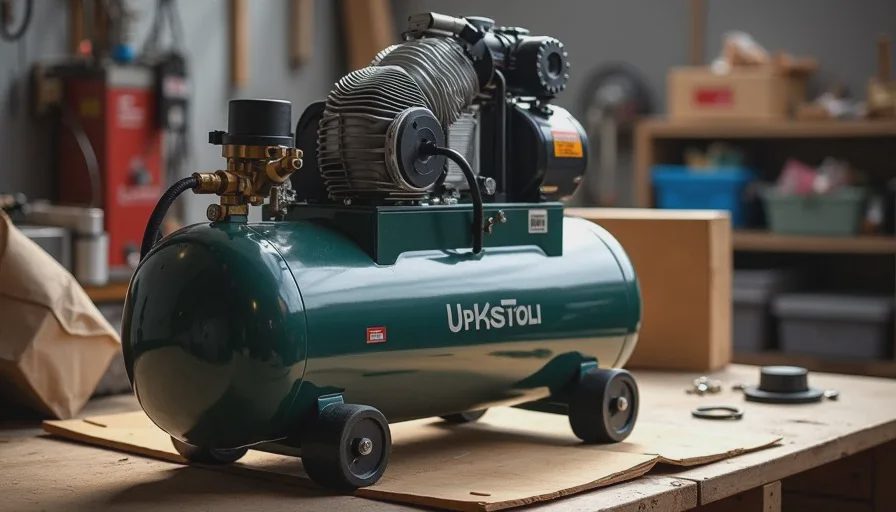
I have a box in my garage. It's full of dead air compressors.
Not cheap ones. Not no-name brands from Amazon. Name-brand compressors. Well-reviewed compressors. Compressors that looked great in the box, felt solid in the hand, and worked perfectly—for about eighteen months.
Then they died. One melted its piston ring on a hot day in Moab. One seized up after a dusty season in the desert. One just stopped building pressure one morning, no warning, no drama, just a quiet death in the back of my truck.
I've been through six of them in twelve years. Six different brands. Six different price points. Six different sets of promises on the box.
And I've learned one thing: the first unboxing tells you almost nothing. The second summer tells you everything.
The Unboxing Trap
Every new compressor looks great out of the box. It's shiny. It smells like new plastic and factory grease. The instructions are crisp. The bag is clean. The hose is neatly coiled. The gauge is clear. The buttons click satisfyingly.
You plug it in. It fires up. It inflates a tire in what feels like record time. You're impressed. You write a five-star review. You recommend it to your friends.
Then you put it away. It sits in the back of your truck, or in your garage, or in that storage bin you keep meaning to organize. It gets hot in the summer. Cold in the winter. Dusty from the trails. Shaken around by every bump you hit.
Eighteen months later, you pull it out for a trip. It's slow. It's noisy. It overheats after one tire. Or it just won't start.
You've been duped. Not by the brand, necessarily. By the way you bought it.
The problem with most compressor reviews is that they're written on day one. They're about the unboxing, not the long haul. They're about features, not durability. They're about speed, not reliability. They're about what the compressor can do at peak performance, not what it does after sitting in a hot vehicle for a summer.
What matters is not what a compressor can do on day one. It's what it can still do on day seven hundred.
The Long Haul: What Actually Matters
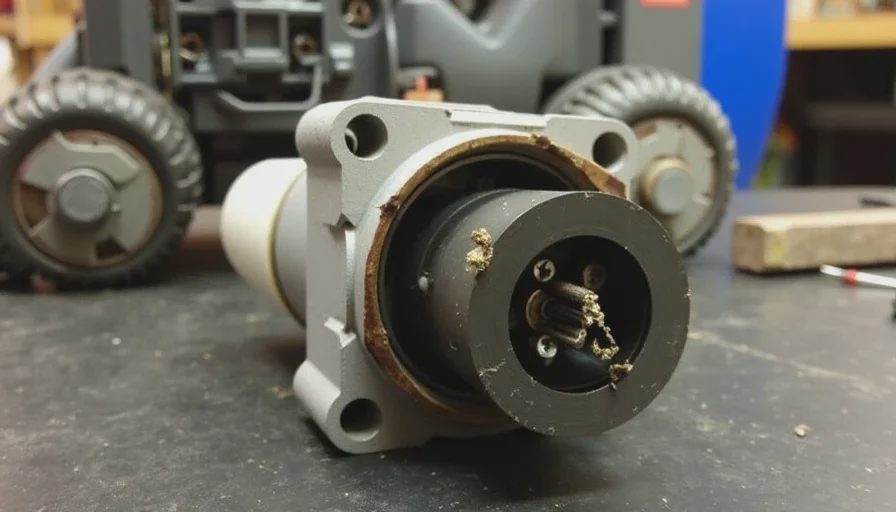
After years of killing compressors, I've developed a list of what matters. This isn't about specs. It's about survival. It's about what keeps a compressor working season after season, trip after trip.
1. Build Quality: Metal Over Plastic
This is the biggest differentiator. Compressors that last are built with metal. Metal cylinders. Metal pistons. Metal valves. Metal heads.
Compressors that die are built with plastic. Plastic components that warp under heat. Plastic that expands and contracts differently than metal. Plastic that cracks when it gets cold. Plastic that fails when you need it most.
What matters: Look for a compressor with a metal cylinder head and a metal piston. The cylinder itself should be metal. The valves should be metal. There shouldn't be a lot of plastic in the moving parts.
What to avoid: Compressors with a lot of plastic in the pump mechanism. They might be lighter. They might be cheaper. They won't last. I've seen plastic pump housings crack in the heat of a desert summer. I've seen plastic pistons seize up in the dust. I've seen plastic fittings break off in the hose, leaving you stranded with a useless compressor and a half-inflated tire.
Look for: A compressor that feels heavy for its size. That weight is usually metal. If you look inside, you'll see the difference. Metal is a good sign.
2. Duty Cycle: The Hidden Spec
Duty cycle is the percentage of time a compressor can run without overheating or damaging itself. If a compressor has a 33% duty cycle, it can run for 10 minutes, then needs 20 minutes to cool down. If you ignore that and run it for 30 minutes straight, you're going to kill it.
Most compressors don't advertise their duty cycle clearly. But the good ones have a high duty cycle—50% or more. The great ones have a 100% duty cycle, meaning they can run continuously without overheating.
What matters: A compressor that can inflate all four of your tires without needing a cooldown break. If you're airing down and back up, you want to be able to do it in one session. Not three.
What to avoid: Compressors with a low duty cycle that aren't designed for continuous use. They're fine for topping off a tire. They're not fine for airing down from 40 psi to 15 psi and back up again. That's a demand they just aren't built for. You'll be sitting around waiting for a cool-down break while your friends are already on the trail.
Look for: A compressor that can run for at least 30 minutes continuously. This is crucial for off-road use where you're airing up multiple tires, often in dusty, hot conditions.
3. Cooling: The Death of Compressors
Heat kills compressors. It's the number one reason they fail. The piston expands. The seals melt. The oil breaks down. The motor demagnetizes. The whole thing just gives up.
What matters: A compressor that can shed heat. Look for cooling fins on the cylinder head. Look for a fan that moves air across the motor. Look for a design that doesn't trap heat.
What to avoid: Compressors with no cooling. The ones that just rely on the ambient air to keep them cool. That's fine for occasional use. It's not fine for regular use in hot weather.
Look for: A compressor with active cooling. A fan or good heat sinks. Something that moves air. If you can't see it, it's probably not there.
4. Power Source: Direct Battery vs. Cigarette Lighter
This is a hard lesson I learned the expensive way. Compressors that plug into a cigarette lighter are underpowered. They draw too much current for that circuit. They blow fuses. They overheat. They fail.
What matters: A compressor that connects directly to the battery with alligator clips. This gives the compressor full power, reduces voltage drop, and keeps the electrical system in your vehicle intact.
What to avoid: Compressors that plug into a cigarette lighter. They might be convenient. They might work for the first few uses. But they're underpowered and they're hard on your vehicle's electrical system. You'll blow a fuse eventually, and it will happen when you're remote.
Look for: A compressor with heavy gauge wire and secure clamps. It's a sign that the compressor is designed for serious work. If it has a cigarette lighter plug, it's designed for occasional use. If it has clamps, it's designed for real use.
5. Airflow and Pressure: Real Specs vs. Marketing Specs
Every compressor claims to deliver "enough" airflow. "Enough" is defined by what you need, not by what the box claims. Marketing specs are often inflated. They test the compressor with no load, no hose, no restriction. Real-world numbers are lower.
What matters: A compressor that can inflate a 33-inch tire from 15 psi to 40 psi in under four minutes. That's a real-world benchmark. Anything slower than that is going to try your patience and test your vehicle's electrical system.
What to avoid: Compressors that advertise huge numbers but take forever to inflate a tire. They're underpowered. They're overrated. They'll waste your time and test your patience when the sun is beating down on you.
Look for: A compressor with a high CFM rating at a high PSI. The CFM (cubic feet per minute) at zero PSI doesn't matter. The CFM at 40 PSI matters. That's where you'll be running it.
6. Reliability in Dust and Heat
Off-pavement driving is dusty. The back of a vehicle is hot. The desert is brutal. The mountains are cold. The road is rough. A compressor that survives all that is a compressor that's built right.
What matters: A compressor that can handle the environment. One that has an air filter that can be cleaned. One that has a cooling system that works in hot conditions. One that's built to be shaken around in a vehicle.
What to avoid: Compressors with no air filter. They suck in dust, which grinds down the piston and cylinder, reducing performance and eventually killing the compressor. Compressors that rely on passive cooling in hot weather. They overheat quickly. Compressors that are fragile and can't handle being bumped around.
Look for: A compressor with an air intake that's protected, accessible, and cleanable. A design that allows for heat dissipation in a hot truck. A compressor that feels solid in the hand, not like it's going to fall apart.
7. Longevity: The Second Summer Test
Here's the test I use on every compressor I review. It's not a test you can do in a day.
Buy the compressor. Unbox it. Use it. It should work perfectly.
Put it in the back of your truck. Drive it around for a year. Don't baby it. Let it get hot, cold, and dusty.
Take it on trips. Use it regularly. Air down. Air up. Use it in hot weather. Use it in cold weather.
At the start of the second summer, pull it out and use it again. Does it work? Does it perform the same? Does it overheat? Does it have any issues?
If a compressor makes it through that test, it's a keeper. Most don't.
What to Look For in a Portable Air Compressor
Here's my checklist for buying a compressor that will last.
Top priorities:
Metal internal components. Metal cylinder, metal piston, metal valves. The pump mechanism should be metal. No plastic.
High duty cycle. 50% or more. 100% is best.
Active cooling. Fan or fins that move air across the motor and pump.
Direct battery connection. Alligator clips. Not a cigarette lighter plug.
Air filter that's accessible and cleanable.
Enough power to inflate your tires quickly. Look for CFM at 40 PSI. A good benchmark is 4-5 CFM at 40 PSI for a 33-inch tire.
A known brand with a reputation for reliability. Not a brand that changes every year. A brand that's been around and has a track record.
Nice-to-haves:
A gauge that's accurate and easy to read. Analog or digital. Doesn't matter as long as it works.
A long hose. You don't want to be fiddling with a short hose when you're at the tire.
A storage bag. Keeps the compressor clean and organized. Keeps the hose and accessories together.
A pressure shut-off. Auto-shutoff at a set pressure is a convenience that helps prevent over-inflation.
A warranty that's more than one year. A longer warranty usually indicates confidence in the product.
What to Avoid
Cigarette lighter compressors. They're underpowered. They blow fuses. They overheat.
Compressors with no cooling. They'll overheat and die.
Compressors with plastic components. They'll break.
Compressors with low duty cycles. You'll be waiting around for them to cool down.
Unbranded compressors from unknown manufacturers. You don't know what you're getting. Support is a gamble. Parts are usually unavailable.
Compressors that are very cheap. There's a reason they're cheap. They're made of cheap materials. They'll fail.
Compressors that are very heavy. They're harder to carry and store, and the extra weight can be a burden when you're packing for a trip.
The Compressors I've Killed
Let me tell you about a few of them. Names omitted to protect the guilty.
Compressor #1: This was a 12V unit with a metal cylinder and a plastic head. It worked great for a year and a half. Then the head cracked in the heat of a summer trip. I was in the middle of inflating my tires and it just... stopped. The crack was right at the base of the head, where the heat had warped the plastic. I finished the trip with a bicycle pump.
Compressor #2: This one had a metal head and a plastic piston. It died from dust. The air filter was a tiny foam filter that clogged quickly. The dust got past it and wore down the piston, reducing pressure to the point where it couldn't inflate tires beyond 25 PSI. I was airing up on a forest road, and it couldn't get the last tire above 25 pounds. I had to drive slowly to the next town on under-inflated tires.
Compressor #3: This was a high-end unit. Metal everything. Great specs. But it had no active cooling—just passive cooling fins. It overheated on a hot day and the thermal cutoff tripped. It would run for two minutes, then shut off for ten. Airing up four tires took over an hour. I was sitting in the sun, sweating, waiting for it to cool down.
Compressor #4: This was a cheap unit that came with a cigarette lighter plug. It blew the fuse in my truck on the first use. I replaced the fuse, tried again, and it blew again. I ended up using it with alligator clips, but it was underpowered and slow. It died after a season of use.
Compressor #5: This was a mid-range compressor with good reviews. It worked well for two years. Then the motor started making a noise—a high-pitched whine. A month later, it seized up entirely. I opened it up and found that the bearings had failed. The motor was toast.
Compressor #6: I'm currently testing this one. It's got a metal cylinder, metal piston, metal head, high duty cycle, active cooling, and direct battery connection. I've had it for two years. I'll report back.
Real-World Advice
Test your compressor before you need it.
Don't wait until you're in the middle of nowhere to discover that your compressor doesn't work. Use it at home. Inflate all four tires. See how fast it is. See if it overheats. Make sure it works.
Keep it clean.
Dust kills compressors. Clean the air filter regularly. Wipe down the cooling fins. Keep it in a bag or case. Don't let it roll around in the back of the truck collecting dirt and dust.
Don't run it too long.
Respect the duty cycle. If you have to stop and let it cool down, do it. It's better to wait than to kill the compressor and have no way to inflate your tires.
Store it properly.
Don't leave it in a hot vehicle for weeks on end. Heat degrades the seals and plastic components. If you can, store it in a cooler location. If you can't, at least put it in a bag to protect it from dust and sun.
Buy quality.
I've killed six compressors. Six. I've spent more replacing cheap compressors than I would have spent on one good one. Don't do what I did. Buy quality the first time.



No comments yet — be the first to share a thought.