I've fixed a lot of things on the trail. Bent tie rods. Blown hoses. Broken leaf springs. Electrical gremlins that made no sense at 9,000 feet. I've patched radiators with duct tape and chewing gum. I've limped home on three lug nuts and a prayer.
And every single time, I've told myself the same thing: Well, that's just trail life. Stuff breaks. You deal with it.
Except that's not really true.
Most of the things I've fixed on the trail didn't break because of the trail. They broke because of something I did—or didn't do—in the garage. The trail just exposed it. The trail found the weak point. And the weak point was almost always my own work.
Here are three trail repairs that taught me that lesson. Hard.
Repair #1: The Broken Serpentine Belt
The Trail Story
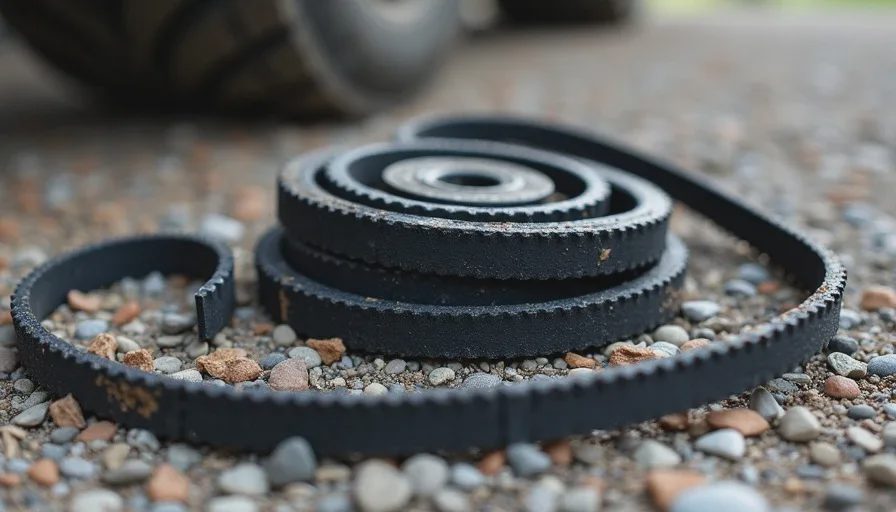
I was two hours into a remote desert trail in southern Utah. The truck was running fine. Then the temperature gauge started climbing. Slowly at first, then faster. I pulled over, popped the hood, and found the serpentine belt shredded into a hundred pieces of black rubber spaghetti. No belt. No alternator. No water pump. No power steering.
I had a spare belt. I always carry a spare belt. I put it on in about twenty minutes, tightened the tensioner, and rolled out.
The new belt lasted twelve miles. Then it shredded too.
I put on the second spare belt. It lasted eight miles.
I was stuck. I had no more belts. I was fifty miles from pavement in a truck that wouldn't run without a belt. And I had my daughter with me. Again. (She's a trooper. She's also a witness to most of my worst moments.)
The Garage Mistake
When I got home and actually diagnosed the problem, the answer was obvious. The tensioner pulley had a rough spot. A tiny burr on the edge of the pulley, probably from years of use. Every time the belt ran over that spot, it got a little nick. After a few thousand revolutions, the nick turned into a cut. The cut turned into a tear. The tear turned into a shredded belt.
I'd replaced that belt twice in the garage before the trip. I'd even noticed that the pulley looked a little rough. I thought, Eh, it's fine. I'll replace it next time.
"Next time" was on the trail. Fifty miles from help. With my daughter watching me sweat.
The Lesson
If you notice something is marginal in the garage, it's not going to get better on the trail.
I knew that pulley was rough. I knew it was going to cause problems. I chose to ignore it because I was in a hurry and it wasn't "that bad."
The trail doesn't care about your hurry. The trail doesn't care if it's "that bad." The trail just finds the weak point and exploits it.
What I do now:
If I notice something marginal, I fix it before the trip
I don't rationalize. If it's rough, it gets replaced. If it's leaking, it gets sealed. If it's worn, it gets swapped.
I replace wear items on a schedule, not on a "when I get around to it" basis
I carry spare belts, but I also carry spare pulleys—because now I know
Repair #2: The Cross-Threaded Bolt
The Trail Story
I was on a forest road in the Pinaleño Mountains. Nothing extreme. Just a bumpy dirt road with a few rocky sections. The kind of road you'd take a Subaru on.
I heard a clunk from the front end. Not loud. Just a metallic thunk that felt like something shifted. I stopped, crawled underneath, and found that one of the control arm bolts had worked its way loose. Not all the way out. Just loose enough to move.
I tightened it with my trail tools. It felt tight. I kept going. Another mile, and it was loose again. I tightened it again. It happened a third time. I was using thread locker from my field kit. It wasn't holding.
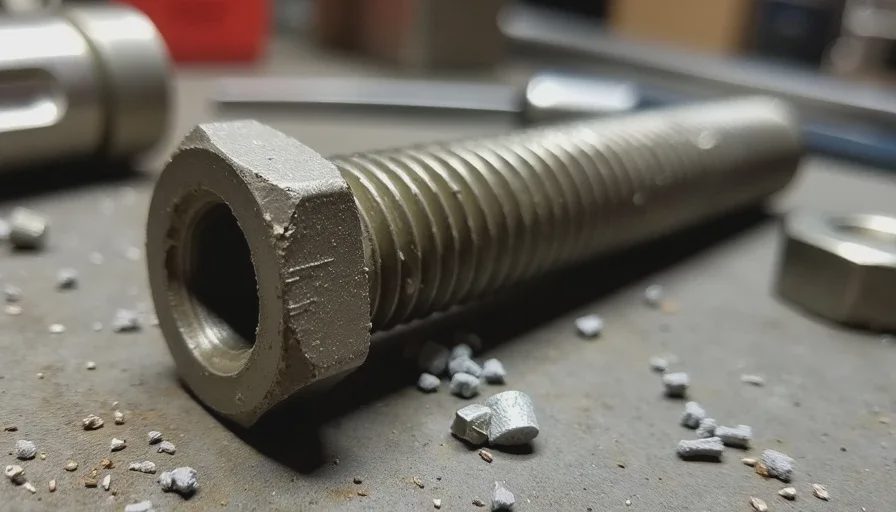
I finally stopped and looked closely. The bolt was cross-threaded. I'd cross-threaded it in the garage when I installed the new control arms. It had been holding—just barely—for months. But the trail vibrations had worked it loose.
I was forty miles from home, with a cross-threaded bolt that wouldn't hold torque, and no way to fix it permanently. I limped out slowly, checking the bolt every mile, and made it home with white knuckles.
The Garage Mistake
I'd rushed the install. I was in a hurry, it was late, and I wanted to finish. I started the bolt by hand, but it caught at a slight angle. I thought, Eh, it's fine. I'll just run it in. So I put an impact gun on it and drove it home. It felt tight. I didn't check the thread engagement. I didn't back it out and start over. I just sent it.
The cross-thread didn't fail immediately. It held for months. But it was compromised. The threads were damaged. The clamping force was reduced. And the trail eventually found it.
The Lesson
A cross-threaded bolt is not a bolt. It's a future failure.
If you cross-thread something in the garage, stop. Back it out. Chase the threads. Start over. If you damage the threads beyond repair, replace the part. Don't send it. You're not saving time. You're creating a problem that will find you later.
What I do now:
I start every bolt by hand, with my fingers, for at least three full turns
If it doesn't go in smoothly, I stop and diagnose
I chase threads before assembly—always
I use anti-seize or thread locker appropriately, not as a substitute for proper threading
I throw away cross-threaded bolts and replace them
I use a torque wrench on critical fasteners, not an impact gun
Repair #3: The Overheated Transmission
The Trail Story
This one is embarrassing. I was running a trail in the Sierra Nevada. A long climb, about 2,000 feet of elevation gain on a dirt road. Nothing technical—just a steady, winding climb in second gear. Slow speed. High load. Hot day. Typical.
The transmission temperature gauge started climbing. I knew I should stop and let it cool down. But I was almost at the top. Just a little further. I pushed it.
The gauge hit 250 degrees. The transmission started slipping. The check engine light came on. I pulled over, parked, and let it cool. It took two hours to come back down to normal. I made it home. Barely.
A week later, the transmission started shifting funny. Harsh shifts. Delayed engagement. A whine from the pump. I took it to a shop. The transmission fluid was burned. The clutches were glazed. The torque converter was damaged. It needed a rebuild.
The shop bill was $3,400.
The Garage Mistake
I had been meaning to add an auxiliary transmission cooler for over a year. I knew the truck was borderline—it's a heavy rig, and it works hard on long climbs. I'd read the forums. I'd talked to other drivers. I'd even bought the cooler. It was sitting on my workbench. In the box. Unopened.
I kept putting off the install. It was a weekend project. It would take a few hours. I was busy. I'd do it next month. Then next month. Then next month.
The trail didn't wait for next month. The trail demanded cooling. I didn't have it. The transmission paid the price.
The Lesson
If you know your vehicle has a weakness, address it before the trip, not after.
I knew the truck needed an auxiliary cooler. I knew it. I had the parts. I'd done the research. I just didn't do the work. I traded four hours of garage time for $3,400 of shop time. I paid for it. Expensively.
What I do now:
If I know I need a modification or upgrade, I schedule it and do it
I don't buy parts and leave them in boxes. If I'm going to buy it, I'm going to install it.
I don't rely on the factory system for something that's outside factory conditions
I address known weaknesses before they become failures
I don't push it when temperatures climb—stop, cool down, live to drive another day
The Pattern
Every one of these trail repairs followed the same pattern.
Step 1: I noticed something in the garage. A rough pulley. A bolt that didn't feel right. A known weakness in the cooling system. Nothing urgent. Just a little voice that said, "Hey, you should deal with that."
Step 2: I rationalized. It was minor. It could wait. I was busy. I'd do it later.
Step 3: I went on the trail. The trail found the weakness. The minor thing became a major thing. I fixed it on the trail, poorly, in adverse conditions, with improvised tools. Or I paid someone else to fix it, expensively.
Step 4: I swore I'd never make the same mistake again.
Step 5: I made a different mistake that followed the same pattern.
Why We Do This
Why do we ignore garage issues and hope they'll be fine on the trail?
It's not laziness. Not exactly. It's optimism. We tell ourselves the thing we're ignoring will hold up, that the trail will be gentle, that we'll get lucky. We tell ourselves that fixing it later is a better use of time than fixing it now. We tell ourselves that "close enough" is good enough.
But the trail doesn't reward optimism. It punishes it. The trail is neutral. It doesn't care about your schedule, your budget, or your good intentions. It just presents you with reality. And if reality includes a weakness that you created or ignored, the trail will exploit it.
The trail finds the weak point. And often, the weak point is your own decision not to fix something when you had the chance.
How to Break the Cycle
Here's what I've done to stop making the same mistakes.
1. Keep a "Sweat List"
I have a list on my garage whiteboard. It's called the "Sweat List." It's everything I know is marginal, worn, or incomplete on my vehicle. The things that make me sweat when I think about them.
Every time I notice something, it goes on the list. I prioritize the list. And I work through it before any major trip.
What's on my list right now:
Rear leaf springs are starting to sag (need replacement before the next heavy trip)
Coolant is due for a flush (scheduled for next weekend)
One of the U-joints has a tiny bit of play (replacing it this month)
It's not paranoia. It's responsibility. The trail doesn't care if you're worried. It cares if you're ready.
2. Don't Buy Parts Unless You're Installing Them
This is a hard rule. If I buy a part, I install it within two weeks. If I don't install it within two weeks, I don't buy it. I don't collect parts for a project that may or may not happen. I buy the part when I'm ready to install it.
This sounds simple. It's not. It takes discipline. But it keeps parts from sitting on shelves while I rationalize my way into a failure.
3. Pre-Trip Inspection: The Real One
I do a pre-trip inspection before every major trip. And I don't do the quick walk-around. I put the truck on jack stands, crawl underneath, and check every system. Fluids. Belts. Hoses. Brakes. Suspension. Steering. U-joints. Wheel bearings. Tire condition. Spare tire air pressure. Everything.
It takes two hours. I hate doing it. But it has caught things I wouldn't have found otherwise. A cracked hose. A loose bolt. A CV boot that was about to split. Each one was a disaster waiting to happen. Each one I fixed before it became a disaster.
4. Be Honest About Your Own Judgment
The hardest part is being honest with yourself. It's easier to rationalize. It's easier to say, "It'll be fine." It's harder to say, "This is a problem, and I need to fix it."
But the trail will force that honesty on you anyway. It's better to do it in the garage.
No comments yet — be the first to share a thought.