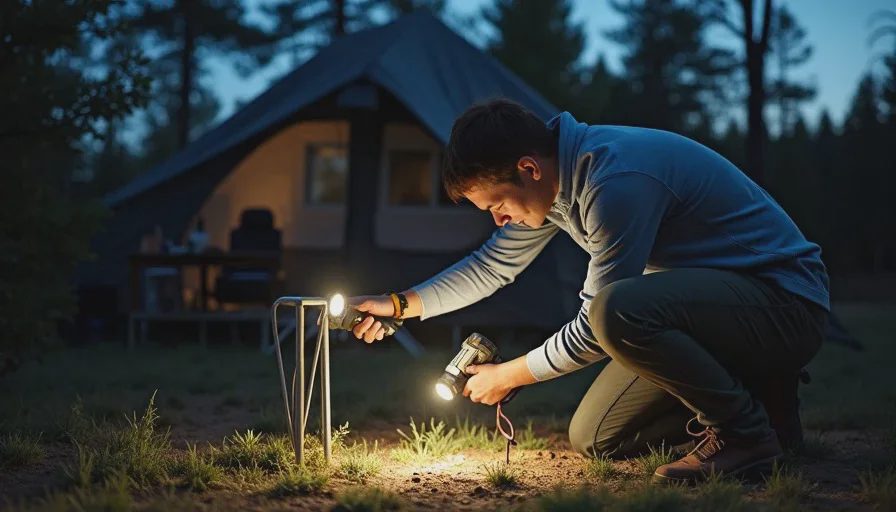
I was standing in a campground in Moab, watching a guy install rock lights on his Gladiator. It was 10 PM. He had a headlamp strapped to his forehead, a drill in one hand, and a box of LED pods at his feet. His buddy was holding a flashlight and handing him zip ties.
They'd been at it for two hours. They had another hour to go.
I walked over and asked him what the lights were for. "For the rocks," he said. "So I can see where my tires are going."
"Have you ever run this trail at night?" I asked.
"No, but I want to be ready."
"How often do you wheel at night?"
"Not that often. But the lights look cool."
I didn't say anything else. I just watched him drill another hole in his frame rail. He was happy. He was excited. He was also spending $400 and an evening of his life on something he was never going to use.
That's the thing about gear. Most of it is a solution looking for a problem. We buy it because it looks cool, because other people have it, because we saw it on Instagram. We don't ask the hard question: Do I actually need this?
The Great Lighting Arms Race
Lighting is the most oversold gear category in the entire outdoor and off-road space. Ditch lights. Rock lights. Light bars. Light pods. Chase lights. Cubes. Bars. Pods. The market has gone insane.
Every time I turn around, there's a new lighting product. Brighter. Sleeker. More expensive. The ads show trucks blasting through the desert at 60 mph with a wall of light ahead of them. It looks epic. It looks necessary.
It's not necessary.
Here's the truth: Most people don't need most lights. They need better driving discipline.
Ditch Lights: For Seeing Where You Want to Go
Ditch lights are mounted on the hood or the A-pillar, aimed diagonally down and to the side. The idea is to illuminate the ditch or the shoulder of the trail so you can see the edge of the road and avoid dropping a tire into a rut or a rock.
When they're useful:
You're driving at night on winding, narrow trails
You're in terrain with deep ruts or steep drop-offs right next to the road
You're moving at a moderate speed and need to see the edge of the road
When they're not useful:
You're driving during the day
You're driving at slow speeds on straightforward trails
You've never actually driven at night on a trail
What you really need:
Better observation. If you're driving during the day, you don't need ditch lights. If you're driving at night, you need to slow down and look where you're going. Ditch lights won't save you from bad judgment. They just let you see the mistake you're about to make a little earlier.
Better driving discipline:
Drive slower at night
Scout the trail before you commit to it
Don't push your comfort zone in the dark
Use your high beams on open sections
Learn to read the terrain with what you already have
Rock Lights: For Seeing Where Your Tires Are
Rock lights are mounted under the vehicle, illuminating the area around your tires. The idea is that you can see exactly where your tires are going, especially when you're crawling over rocks at night.
When they're useful:
You're rock crawling at night
You're in technical terrain where precise tire placement is critical
You're in a situation where you can't get out and spot the line
When they're not useful:
You're driving during the day
You're on dirt roads, forest trails, or any non-technical terrain
You've never actually done rock crawling
What you really need:
Better pacing. If you're in technical terrain during the day, you need good judgement. If you're in technical terrain at night, you should probably stop and wait for daylight. Rock lights are a band-aid for a decision that's already questionable.
Better driving discipline:
Stop and scout the line on foot before you drive it
Use a spotter if you need to (the spotter has a headlamp—you don't need rock lights)
Save technical driving for daylight unless you've got a damn good reason not to
Accept that you can't see everything. That's why you go slow.
Light Bars: For Seeing Far Ahead
Light bars are the big ones on the roof or bumper. They throw a wall of light down the trail, illuminating the road ahead for hundreds of yards. They're the most dramatic, the most expensive, and the most unnecessary for most people.
When they're useful:
You're doing high-speed desert running at night
You're traveling long distances on remote roads where there's no oncoming traffic
You need to see far ahead to spot obstacles, animals, or washouts
When they're not useful:
You're on forest roads, switchbacks, or any terrain where you can't see far anyway
You're in an area with other people (you'll blind them and make yourself hated)
You're driving at speeds that don't justify the extra light
What you really need:
Better speed management. Light bars let you see far ahead so you can drive fast. But driving fast at night on unknown trails is a recipe for disaster. The light doesn't fix that. It just makes you feel like you're in control until you're not.
Better driving discipline:
Slow down at night. Even with light bars. Even with good visibility. Slow down.
If you can't see far, don't drive fast. That's not a lighting problem. That's a judgment problem.
Turn off the light bar when other people are around. It's polite. It's safe. It's the right thing to do.
Understand that light doesn't make you Superman. It makes you a driver with a light.
The Question You Should Ask
Before you buy any lighting, ask yourself one question:
How many times have I needed this on a trail?
If the answer is zero—and for most people, it is—you probably don't need it.
What You Actually Need
Let's be honest about what actually helps you see on the trail.
Good Headlights
Stock headlights are often terrible. They're dim. They're fogged. They're aimed wrong. If you can't see well with your headlights, that's the first place to spend your money.
What to do:
Buy quality LED headlights that are designed for your vehicle
Adjust them properly so you're not blinding oncoming drivers
Keep them clean and clear
Use them correctly—high beams where it's safe, low beams where it's not
A Good Headlamp
This is the light you'll actually use more than any other. You'll use it to set up camp, to scout a trail, to fix a flat tire, to cook dinner, to read a map. It's the most versatile light you can carry. It's also the cheapest.
What to look for:
A red light mode. It preserves night vision and doesn't blind people.
A comfortable headband that you can wear for hours.
A beam that's bright enough for trail work but not blinding.
A rechargeable battery that lasts long enough for a weekend.
A Handheld Spotlight
Sometimes you need more light than a headlamp provides. A handheld spotlight or high-lumen flashlight is perfect for that.
What to look for:
A focused beam that throws far.
A comfortable grip and easy on/off switch.
A reliable battery that doesn't die halfway through the night.
The Driving Discipline Checklist
Here's the thing about driving at night. It's not about the lights. It's about the decisions you make.
Can you see clearly? If not, stop. Check your headlights. Clean them. Aim them. Replace them if needed.
Are you going the right speed? At night, your speed should be limited by your visibility. If you can't stop within your headlight range, you're going too fast. That's not a lighting issue. That's a judgment issue.
Is the terrain familiar? If you don't know the trail, you have no business driving it fast at night. Scout it in daylight first.
Are you alone? Night driving is more dangerous. It's safer with a buddy. But even with a buddy, you're still taking a risk. Accept that.
Could you turn around? If you're uncomfortable, stop. Turn around. Campsites are plentiful. Trauma is not.
A Story
Last year, I was coming down a trail in the San Juan Mountains. It was late afternoon. I was in a hurry to get back to camp before dark. I was pushing it. Going too fast for the terrain.
I hit a section of loose rock. The rear end slid. I caught it, but it was close. Too close. I pulled over, stopped, and sat there for a minute.
I'd made a decision to push it because I was afraid of the dark. I was thinking about lights. I was thinking about visibility. I was thinking about how I'd feel if I had to drive that trail in the dark.
Then I realized something. I'd been driving that trail in the light. And I'd almost crashed. What did I think the dark would do? Make it easier?
I drove slower after that. Much slower. I made it to camp just as the sun went down. I didn't need rock lights or ditch lights. I needed to slow down. And I needed a headlamp for the camp setup.
No comments yet — be the first to share a thought.