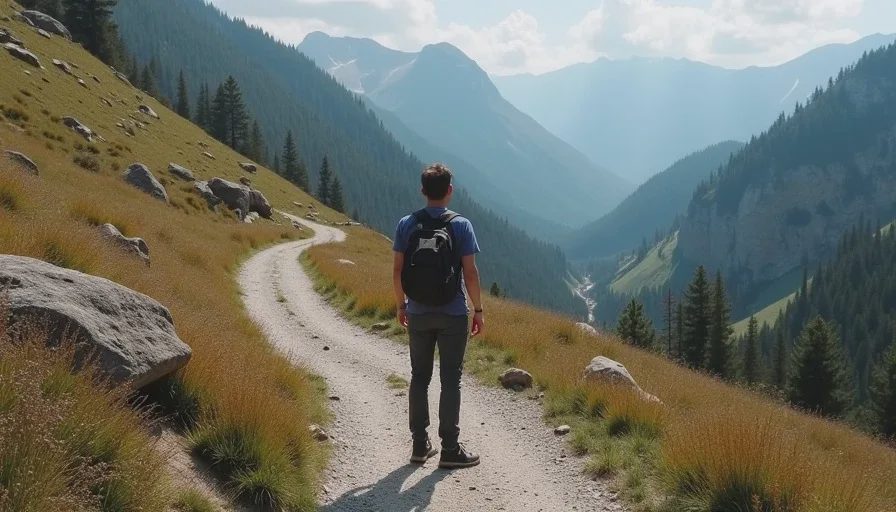
I was on a trail in the Maze District of Canyonlands. It was late afternoon. The light was golden. The red rock walls were glowing. I'd been on the trail for two days and was planning to be out for three more.
Then I hit a section I didn't remember from the map. Steep. Loose. Narrow. The kind of section where you can't turn around once you've committed. It was doable. Probably. But it was right at the edge of what I was comfortable with. And I was alone. And it was getting late. And I had my daughter with me.
I stopped. I got out. I walked the section. I looked at the line. I thought about it. I walked it again.
I could make it. Probably. But there was a chance I couldn't. There was a chance I'd get stuck. There was a chance I'd slide. There was a chance it would take hours to get through. And I was alone. With my daughter.
I turned around.
It was the right call. The only call. But it was hard. Really hard. I'd driven two days to get there. I'd planned this trip for months. Turning around felt like failure. It felt like giving up.
It wasn't failure. It was judgment. The best kind of judgment. And it's the most underrated skill in off-road driving.
The Skill That Nobody Talks About
We talk about driving skills. About line choice. About throttle control. About recovery techniques. We talk about gear, tires, suspension, and winches. We talk about route planning and navigation.
We don't talk about turning around. Not enough. It's not sexy. It doesn't make for good Instagram content. It's not a skill you can show off. It's just... stopping. Just admitting that this isn't the day.
But it might be the most important skill you can develop. Because the trail is full of situations where continuing is the wrong choice. And recognizing that—before you're in trouble—is what separates experienced drivers from people who get into trouble.
Turning around isn't failure. It's judgment. The good kind. It's the judgment that keeps you safe. The judgment that saves your vehicle. The judgment that lets you come back tomorrow.
The Costs of Not Turning Around
I've seen it happen so many times. Someone gets into a situation they shouldn't have gotten into. They get stuck. They get damaged. They get hurt. And the whole time, they knew they should have turned around. They just didn't.
The cost:
Time. You spend hours getting out of a situation you could have avoided. Hours you could have spent enjoying the trail. Hours you'll never get back.
Vehicle damage. Broken parts. Scraped paint. Bent metal. All of it could have been avoided.
Safety. The risk of injury. The risk of being stranded. The risk of something serious happening. It's not worth it.
Stress. The stress of being stuck. The stress of being unsure. The stress of trying to get out. It ruins the trip.
Respect. Your own and others. There's no shame in turning around. There's shame in getting into trouble you could have avoided.
Why We Don't Turn Around
It's not that people don't know how to turn around. It's that they don't want to. There are psychological barriers that make it hard to stop, reverse direction, and go back.
The Sunk Cost Fallacy
You've driven two hours to get here. You've planned this trip for months. You've invested time, money, and energy. If you turn around, all of that is wasted.
This is the sunk cost fallacy. The idea that you need to continue because you've already invested so much. It's a trap. The investment is already gone. It doesn't matter. What matters is what happens next. If continuing is dangerous, the smart choice is to stop, regardless of what you've already spent.
The Ego Problem
Turning around feels like admitting you're not capable. You think it makes you look weak. You want to be the person who can handle it. You want to prove something—to yourself, to others.
Nobody cares. Really. Nobody is keeping score of who turned around. Nobody is judging. And if they are, they're not people you should be wheeling with.
The Optimism Bias
You think it's going to get better. It's just this one section. The trail will be easier after this. You'll find a way.
Sometimes it does get better. Sometimes it doesn't. And you won't know until you're in it. By then, it's too late. It's not optimism—it's wishful thinking. And it's dangerous.
The Pressure to Perform
You're with a group. They're moving forward. You don't want to slow them down. You don't want to be the one who says, "I can't do this."
This is one of the hardest pressures to resist. The group dynamic. The momentum. The fear of looking weak. But here's the truth: a group that's worth being with will support you. A group that isn't isn't worth following. A good group wants everyone to be safe, not just to keep moving.
The Framework for Turning Around
Here's what I use to decide when to turn around. It's not a formula. It's a framework. It's based on experience, judgment, and being honest with yourself.
Step 1: The Honesty Check
Ask yourself these questions:
"Can I do this?" Not "Maybe." Not "Probably." Can you do it confidently?
"Is my vehicle ready for this?" Not "I think so." Do you know?
"Do I have the time to do it safely?" Not "I'll make it work." Do you have a margin?
"Do I have the gear and skills to handle it if it goes wrong?" Or are you just hoping?
If you can't answer yes to all of these, you need to think twice. Three yeses and one maybe is a maybe. A maybe is a no.
Step 2: The Margin Check
What's your margin for error? How much room do you have?
How much daylight is left?
How much fuel?
How much water?
How long will it take to get help?
How much do you know about the conditions?
If your margin is small, turn around. If you're comfortable, keep going. But be honest about the margin. Don't reduce it to get the answer you want.
Step 3: The "What If" Test
Ask yourself:
What if this takes three hours longer than I think? What if I get stuck? What if the weather changes? What if I break something? What if I can't get out? What if I'm injured? What if I'm stranded overnight?
If any of those are real possibilities and you don't have a plan for them, turn around. If you have a plan, evaluate it. Is it a good plan? Is it realistic? Or is it a hope?
Step 4: The Decision
If you pass all the checks—you're honest about your skills and gear, your margin is comfortable, and you have a plan for the "what ifs"—you can keep going. If not, you need to turn around.
Don't hedge. Don't make excuses. Don't move the goalposts. Be honest. Turn around if that's the right call. It's the right call more often than you think.
The Signs That It's Time
Over the years, I've learned to recognize the signs that it's time to turn around. Here are some of them.
The Trail Is Harder Than Expected
If the trail is harder than you expected in the first hour, it's not going to get easier. The terrain will stay the same or get worse. If you're already pushing your limits, you'll be in trouble later.
The Weather Is Turning
If the weather is changing, don't wait. Rain, snow, heat, cold—they all make the trail harder. If the forecast is for rain in two hours, and you're two hours from shelter, turn around. If it's already raining, the trail is already getting worse. Get out while you can.
The Vehicle Is Struggling
If the vehicle is overheating, using more fuel than expected, or having other issues, turn around. The trail isn't going to fix the vehicle. It's going to make it worse. Don't push it.
You're Tired
Fatigue is a killer. It slows your reaction time. It clouds your judgment. It makes you more likely to make mistakes. If you're tired, stop. If you're on a long trip, rest. If you're near the end of your trip, don't push through. Turn around and live to drive another day.
You're Alone
Solo travel is different. There's no one to help. There's no one to spot. There's no one to rescue. If you're alone, be twice as conservative. If you're unsure, turn around. The stakes are higher. The margin for error is smaller. Be honest about it.
You've Got Passengers
Kids. Spouses. Friends who aren't experienced. The responsibility is real. You owe it to them to be safe. If you have passengers, be more conservative. Their safety depends on your judgment.
Your Gut Says No
This one is hard to quantify. But it's real. Your gut knows things that your brain hasn't processed yet. If your gut says no, listen to it. It's not being dramatic. It's paying attention to something you haven't noticed yet.
The Emotional Cost of Turning Around
Turning around is hard. It's not just a physical decision. It's an emotional one. You feel like you've failed. You feel like you've let yourself down. You feel like you wasted the trip.
I've felt all of that. I've felt it many times. And every time, I've realized that the feeling passes. The disappointment fades. The memory of the trip isn't about the place I didn't get to. It's about the decision I made. The judgment I used.
And I always remember the decision more than the disappointment. I remember that I made the right call. That I put safety first. That I didn't let my ego get in the way.
Turning around doesn't mean you're a bad driver. It means you're a good driver. It's a decision rooted in awareness, experience, and self-knowledge. And it's one that lets you keep coming back to the trails you love.


No comments yet — be the first to share a thought.