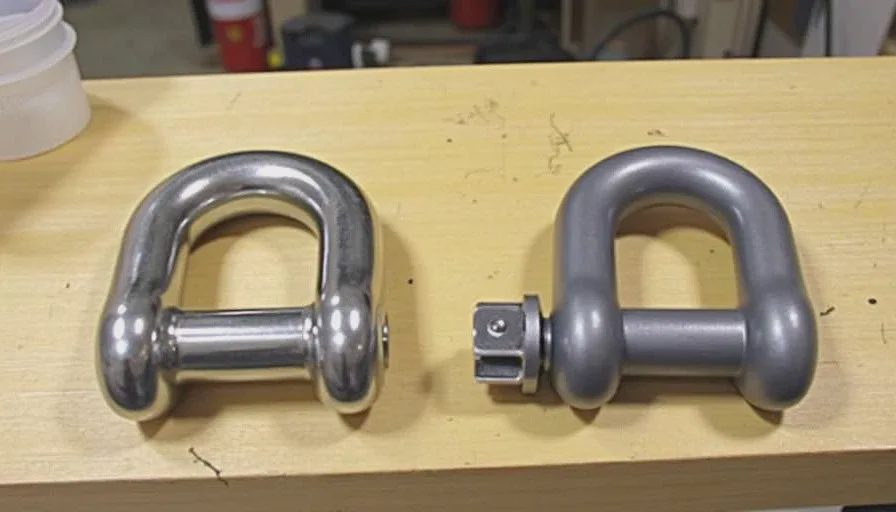
I was standing on the side of a trail in Moab, watching a guy try to recover his friend's truck. He had a hard shackle—a big metal D-ring—attached to a recovery point. He was threading a strap through it. The strap was under tension. The truck was stuck in a ditch.
Then the shackle shifted. The strap slipped. And that heavy piece of metal, under load, swung like a pendulum and smacked into the side of the truck. It left a dent the size of a dinner plate.
Nobody was hurt. But it was close. Really close. If that shackle had hit a person instead of sheet metal, it would have been a hospital visit. Or worse.
I walked over and handed him a soft shackle. "Use this next time," I said. "It won't dent your truck. It won't kill anyone. And it's easier to use."
He looked at it skeptically. "Is that thing strong enough?"
"Stronger than you need," I said. "And a lot safer."
He used it. It worked. He was a convert.
That's the thing about soft shackles. They look like they shouldn't work. A piece of rope holding a vehicle under thousands of pounds of tension? It seems wrong. It seems weak. It seems like a gimmick.
It's not a gimmick. It's an upgrade. And once you've used them, you don't go back.
What They Are
Hard shackles are the classic D-ring or bow shackle. They're made of metal. They have a threaded pin that screws in and out. They're heavy. They're strong. They've been used for decades.
Soft shackles are made of high-strength synthetic rope—usually Dyneema or similar. They're light. They're flexible. They work like a Chinese finger trap: the more tension you put on them, the tighter they grip. No moving parts. No threads. No metal to fly through the air if something breaks.
Both do the same job: they connect recovery gear to recovery points. But they do it differently. And that difference matters.
The Hard Shackle: The Old Standard
Hard shackles are the traditional choice. They've been around forever. They're what your grandfather used. They're what you see in military photos. They're what most people think of when they think of recovery gear.
The good:
Proven. They've been used for generations. They work.
Simple. No moving parts except the pin. Thread it in, thread it out. Not much to go wrong.
Durable. They can take abuse. They don't fray. They don't get cut easily.
Cheap. A basic hard shackle is less than $20. You can buy a full set for less than a single soft shackle.
The bad:
Heavy. A 3/4-inch shackle weighs over a pound. Carry a few of them and you're carrying pounds of metal. That's weight you're carrying, packing, and storing. It's weight you feel on the trail.
Dangerous. If a hard shackle fails under load, it becomes a projectile. It can travel hundreds of feet. It can break windows. It can break bones. It can kill. And even when it doesn't fail, it can swing and dent your truck (or your person).
Hard on recovery points. The metal D-ring rubs against the recovery point. Over time, it can cause wear and damage. Sharp edges can develop.
Threads get stuck. The pin gets cross-threaded. It gets dirty. It seizes. Then you're stuck trying to get it out. It happens more than you'd think.
Difficult in tight spaces. The hard shape of a shackle doesn't flex. It needs room. In tight spots, it's hard to maneuver.
Can cause galvanic corrosion. The metal can react with aluminum or steel parts, causing rust and bonding. It's a thing. It's annoying.
Where I still use them:
Honestly, not much. My hard shackles sit in a bag in the garage. I use them as doorstops, anchors for tarps, and occasionally for towing other people out when they need a simpler setup. For my own recovery, I've moved on. They're heavy, they're dangerous, and they're harder to use than the alternative.
The Soft Shackle: The Modern Standard
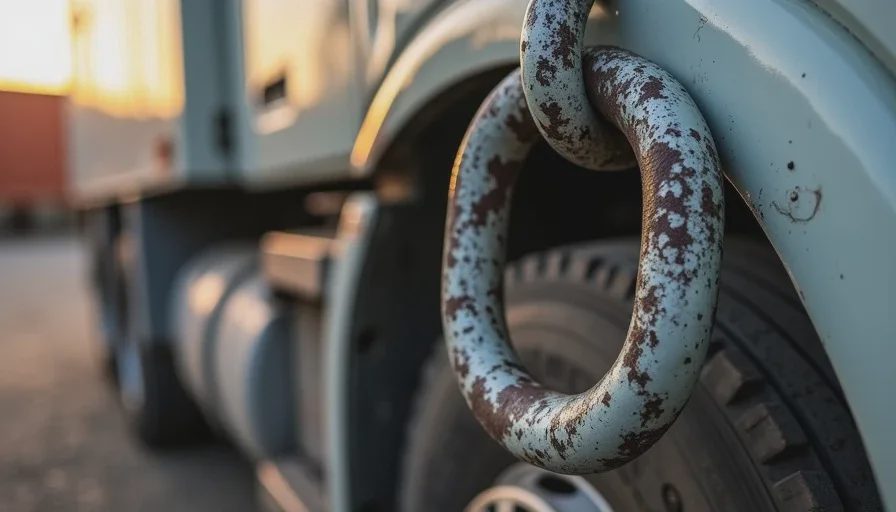
Soft shackles are the new standard. They've been adopted by the off-road and overland community, and for good reason. They're safer, lighter, and easier to use.
The good:
Light. A soft shackle weighs a few ounces. You can carry a whole set in one hand. The weight savings add up.
Safe. If a soft shackle fails under load, it doesn't become a projectile. It just... falls. No metal. No momentum. No danger. It's a huge safety upgrade. And if you drop one, it doesn't dent anything.
Easy on recovery points. The rope material is soft. It doesn't wear or damage the recovery point. No sharp edges. No friction wear.
Flexible. The rope flexes and conforms. It works in tight spaces. It fits through small holes. It's versatile.
Simple. No threads. No pins. No moving parts. Just a loop that tightens under load and loosens when you release the tension. Once you know the trick, it's easier to use than a hard shackle.
Strong. A good soft shackle has a breaking strength of 35,000 pounds or more. That's more than enough for almost any recovery situation. Modern materials are incredibly strong.
The bad:
More expensive. A quality soft shackle costs $40-60. Hard shackles are cheaper. But you're paying for safety and weight savings.
Can be damaged by sharp edges. The rope can fray if it's rubbed against a sharp edge. You need to protect it or use a sleeve. And inspect it regularly—damage can be hard to see.
Requires a bit of technique. You need to know how to put it on and take it off. There's a trick to it. It's not hard, but it's different from a hard shackle. You need to practice. Make sure you can do it with cold hands, under stress, in the dark.
Less familiar. People are used to hard shackles. They don't trust soft shackles. They think they're weak. They're not. But it takes a while to accept that.
Can get dirty. The rope is porous. It picks up dirt, grit, and mud. That can wear the fibers over time. You need to clean and inspect it after use.
The Safety Issue
This is the biggest reason I switched to soft shackles. Safety.
If a hard shackle fails under load, it becomes a projectile. It can travel at high speed. It can cause serious injury or death. I don't want that risk. I've seen it happen. I've seen the dent it leaves. I've seen the consequences. It's not theoretical. It's real. And it's preventable.
If a soft shackle fails under load, it just... falls. No projectile. No danger. The energy is dissipated. It's dramatically safer. It's a no-brainer.
The Practical Difference
Let me give you an example. I'm stuck in mud. My truck is up to the axles. I need a recovery. I have a kinetic rope, a soft shackle, and a recovery point.
With a soft shackle:
I loop the soft shackle through the recovery point and the rope eye.
I pull the tail to tighten it.
I step back.
The recovery vehicle pulls. The shackle tightens. It holds.
With a hard shackle:
I thread the pin through the recovery point and the rope eye.
I screw the pin in.
I make sure it's tight.
I hope it doesn't cross-thread.
I step back.
The recovery vehicle pulls. The shackle holds. The metal is a risk if it fails.
It's not that hard shackles are dangerous. They're not, if used correctly. But the soft shackle is easier. It's lighter. It's safer. And it works just as well.
What I Carry and Why
Here's what I carry in my recovery kit:
Soft shackles: I carry four. Two for the kinetic rope. Two as spares or for multi-point recoveries. They're all 35,000-pound breaking strength. High-visibility colors so I can find them in the dirt.
Hard shackles: I carry two. They live in the bottom of my recovery bag. I use them for things that aren't recovery—like anchoring a tarp or as a weight for a rope. I rarely use them for recovery. They're backup. They're also there for when someone else needs something simple and doesn't trust the soft stuff.
If I had to choose: I'd choose soft shackles. They're lighter, safer, and easier to use. I'd recommend soft shackles to anyone building a recovery kit. The safety upgrade alone is worth it. And the weight savings are significant.
Why I carry hard shackles at all: Because they're useful for non-recovery tasks. Because I have them. Because sometimes I'm recovering someone else's vehicle and they need a simple, familiar attachment point. But for my own recovery, it's soft shackles every time.
How to Use a Soft Shackle
If you've never used a soft shackle, here's the basic technique. It's simple. Practice before you need to use it in a real situation.
Thread the tail. Pass the tail of the shackle through the recovery point and through the eye of the rope you're connecting.
Form the loop. Make a loop with the shackle body.
Pass the tail through the loop. Put the tail through the loop you just formed.
Pull to tighten. Tension locks it in place. The more you pull, the tighter it grips.
Release. When you're done, release the tension and the shackle comes right off.
It takes a few tries to get comfortable with it. But once you do, it's faster than a hard shackle.
What to Look For in a Soft Shackle
If you're buying a soft shackle, here's what to look for:
Material. Dyneema or similar high-strength synthetic rope. It's the standard. It's strong. It lasts.
Breaking strength. At least 35,000 pounds. More is fine. That's plenty for most vehicles.
Length. 18 to 24 inches. Longer shackles are easier to use in tight spots. Shorter ones are easier to store. Pick what works for your recovery points and your storage space.
Sleeve or cover. Some shackles have a sleeve to protect against abrasion. It's worth having.
Color. Bright colors are easier to find in the dirt. Choose orange, yellow, red, or something similarly bright. It helps you find them and keeps you from leaving them behind.
Reputation. Buy from a known brand. Not a no-name Amazon seller. The difference in quality and safety matters. You're trusting your recovery to this gear. Don't cheap out.
A Story
A few years ago, I was recovering a friend's truck from a deep mud hole. He was stuck. I was in a safe position. I used a soft shackle to connect my kinetic rope to his recovery point. I stepped back. He was winched out. The shackle worked perfectly.
After the recovery, we were standing around, talking about the trip. He picked up the soft shackle. He looked at it. He looked at his hard shackle.
"All that weight I've been carrying," he said. "For years. And this thing weighs nothing. And it's safer. Why didn't I switch sooner?"
"You thought it was weak," I said.
"I did," he said. "I was wrong."

No comments yet — be the first to share a thought.